Prevailing wages in California: A contractor’s guide
Blog
Labor regulations
Payroll
Payroll compliance

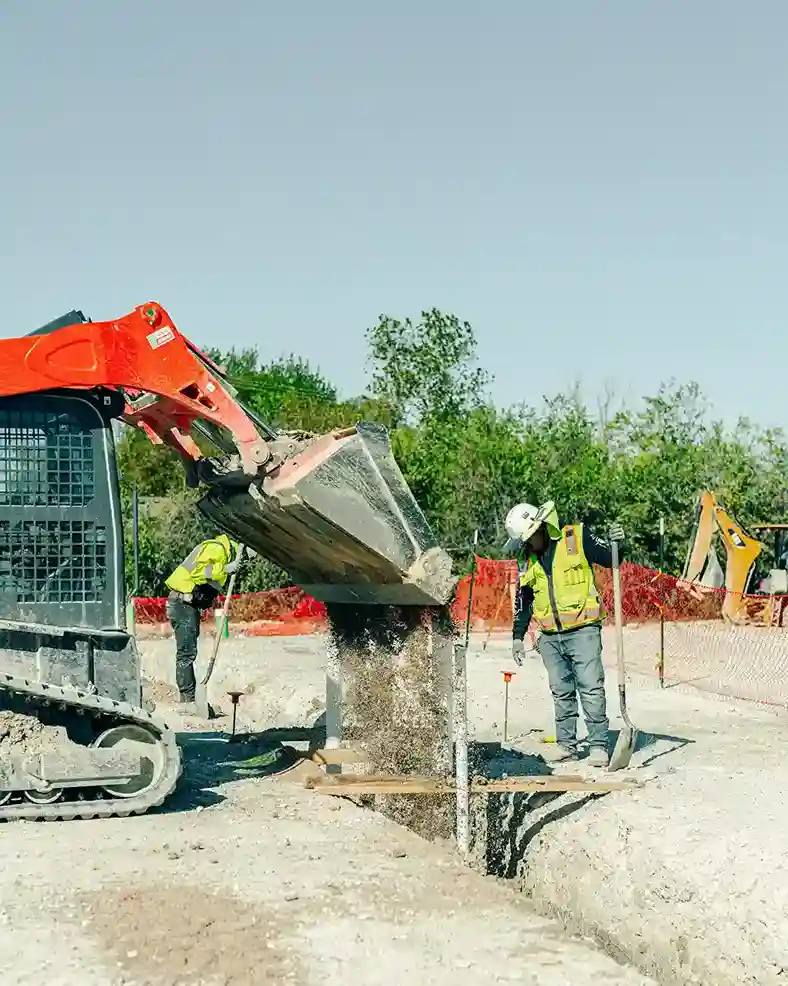
California certified payroll requires contractors on public works projects to verify that all jobsite workers are paid the prevailing wage.
Federal projects follow Davis-Bacon Act requirements, but California state-funded public works projects must also meet California Department of Industrial Relations (DIR) regulations and use Form A-1-131. Staying on top of these reporting standards is the only way to maintain project funding and avoid labor disputes.
This guide details California-specific certified payroll requirements and identifies when and where they apply, how to complete accurate certified payroll reports, and the mistakes that trigger DIR penalties.
Certified payroll is a public works compliance requirement that obligates contractors to document and verify that every worker on a job was paid the correct prevailing wage and benefits. The primary tool for meeting that requirement is the certified payroll report (CPR), a weekly record submitted to the relevant government authority that details hours worked, job classifications, wage rates, and fringe benefits paid for each worker.
Federal projects are subject to the Davis-Bacon Act, which requires contractors to submit Form WH-347 weekly. Many states allow construction companies to use this form for state-funded projects, too. However, California requires contractors to use the DIR electronic certified payroll reporting (eCPR) system to submit the Form A-1-131.
Several other factors make California’s construction certified payroll more complex, including:
According to Labor Code Section 1720, every contractor and subcontractor on a public works jobsite in California must submit records to the DIR weekly.
A project meets these conditions when all of the following are met:
Here are five steps construction companies can take to keep certified payroll data moving while maintaining accuracy.
Before any work begins, verify the project’s status by searching the DIR’s database for its DIR Project ID, often called a “PWC-100” number. The DIR generates this ID when an awarding body submits a PWC-100 form to the state.
Ensure the project is active by using the search tool to locate the project by name, location, or awarding body, and use the ID for any future electronic submissions to link the company’s payroll records to that government contract.
Identify the prevailing wage for every job classification in the county where the crew performs the work. The DIR issues these determinations twice a year, on February 22 and August 22.
While the bid advertisement date typically determines which wage “series” applies to the project, contractors must also check the determination for a double asterisk (**). If this symbol is there, the contractor must pay predetermined wage increases. A single asterisk indicates that prevailing wage determinations that are in effect on the bid’s date of advertisement remain in effect for the life of the project.
Contractors must record crew start times, end times, and meal breaks daily. Using a system like Miter Time Tracking ensures companies capture these timecard entries in the field so the office has precise hours for payroll processing.
Prevailing wage includes base hourly rate and all required employer-paid fringe benefits like health insurance and retirement plans. Calculate the hourly costs of these benefits, and credit them toward the total wage.
Under AB 889, contractors may claim credit for employer-paid fringe benefits toward public works prevailing wage requirements. To convert each benefit into an hourly credit, the contractor must divide the total annual cost of the benefit by the total number of hours worked on all projects throughout the year. The law requires them to carry out this calculation every year to ensure they don’t overclaim credits on public works jobs.
While Labor Code 1771.4 only requires contractors to submit records to the DIR at least monthly, most project contracts and labor compliance programs (LCPs) require weekly submissions. Also, under Labor Code 1776, if the DIR or an awarding body makes a formal written request for records, the contractor has exactly 10 days to provide them. If they miss this window, they face a penalty of $100 per worker, per day.
To avoid this, upload an XML file to the DIR eCPR system and include a signed Statement of Compliance based on DIR Form A-1-131. This is to certify that wages and classifications match the work performed.
Preparing certified payroll in California is notoriously difficult, and many contractors struggle with the complex requirements. In fact, between 2024 and 2025, the San Francisco Office of Labor Standards Enforcement (OLSE) reported that prevailing wage enforcement made up the majority of case resolutions for the ninth consecutive year. The office collected nearly $1.5 million in back wages and penalties in the San Francisco area alone.
Here are a few common mistakes contractors should avoid if they wish to avoid similar repercussions:
The DIR maintains strict oversight for public works in California, and the consequences for failing to meet certified payroll standards are severe. Rather than asking for administrative fixes, the state uses a mix of financial penalties and operational restrictions to make sure contractors follow the rules.
Here are a few examples:
Disconnected tools for time tracking, payroll, and compliance reporting create compounding data entry errors that trigger DIR audits and interest penalties.
Miter eliminates these risks by tying jobsite hours directly to payroll in a single, unified platform. Miter Payroll automatically supports complex prevailing wage and fringe benefit calculations, ensuring contractors capture daily overtime and worker classifications accurately. Rather than spending hours manually formatting data, payroll teams can generate California-specific certified payroll reports instantly, matching the required XML schema for the DIR eCPR system.
Miter also significantly reduces manual reporting work, freeing payroll teams to focus on job cost analysis and labor forecasting rather than manually reformatting data for the DIR every week. By automating the most difficult aspects of California payroll compliance, contractors increase their accuracy and protect their company from payment withholdings and penalties.