Construction safety leading indicators: What to track and why
Blog
Safety

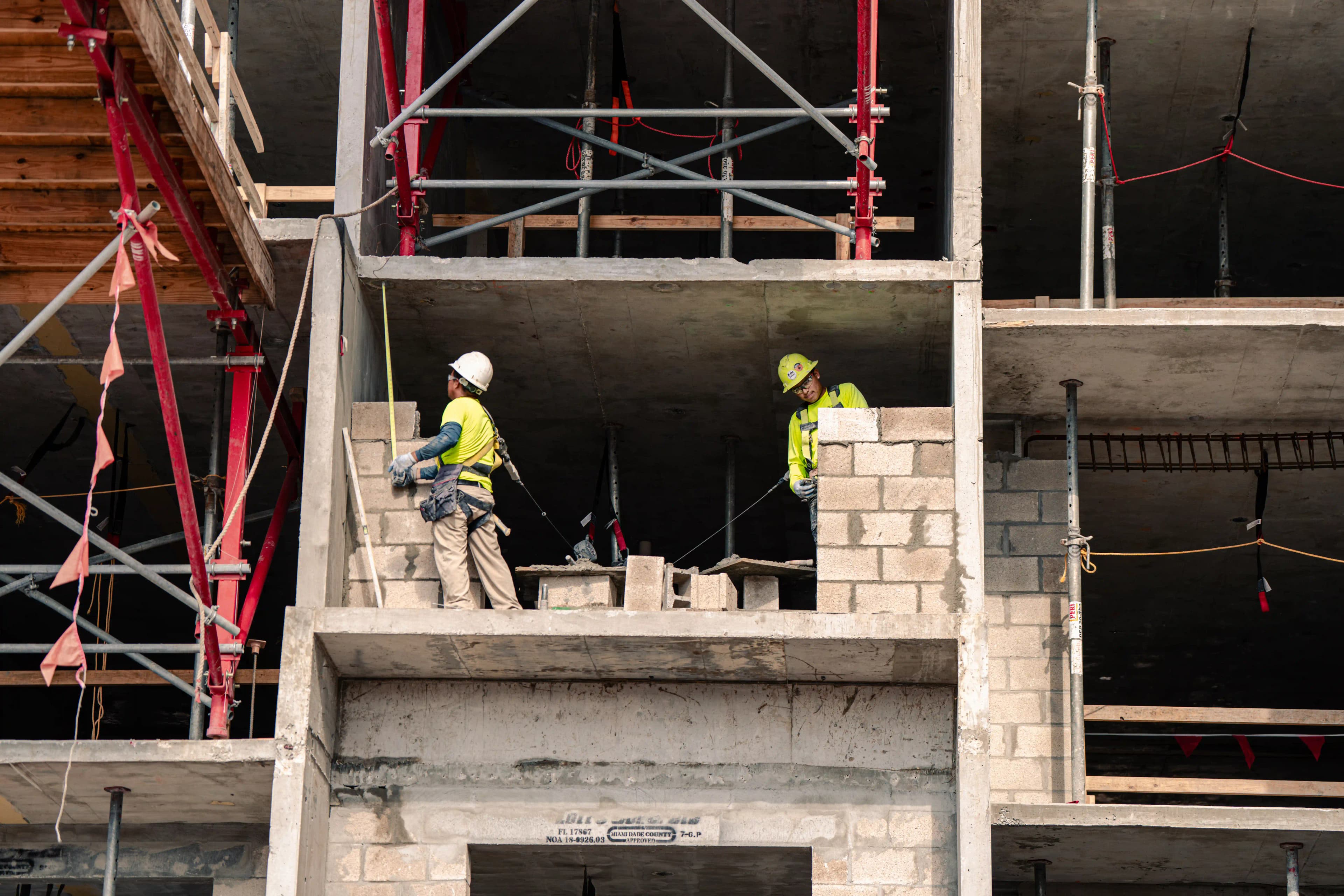
Traditional construction safety programs tend to operate in a reactive loop. Management often focuses heavily on post-incident analysis, evaluating what went wrong only after a worker gets hurt. However, managing safety solely through the lens of past incidents does little to keep crews safe on the ground today.
Behavior-based safety (BBS) aims to refocus daily operations on the front end, targeting the habits and decisions that precede an accident. It gives construction teams a repeatable framework for spotting and correcting at-risk behaviors before they escalate into an Occupational Safety and Health Administration (OSHA) violation or workers’ compensation claim. This guide breaks down exactly what a BBS program is, how it is structured, and how to successfully roll it out across a construction crew.
Traditional safety models are often reactive and punitive, focusing on assigning blame after an incident occurs or penalizing workers when they’re caught breaking a rule. Behavior-based safety flips this approach, focusing on the human element of safety by proactively identifying, tracking, and changing workplace habits before an accident occurs. BBS often relies on the classic antecedent-behavior-consequence (ABC) model, which helps explain why people make the safety decisions they do:
To understand the operational value of a BBS program, construction leaders must look at the distinction between lagging and leading indicators.
Historically, firms have relied on lagging indicators, which are backward-looking metrics that record incidents after they occur. Examples include total recordable incident rate (TRIR), lost-time injuries, and workers’ compensation claims. While necessary for regulatory compliance, these metrics are reactive and don’t show current jobsite risks.
BBS pivots to focus on leading indicators, which are predictive metrics that measure real-time safety on a jobsite. Key examples include observation rates and percentage of safe behaviors. Operations leaders use BBS because leading indicators reveal near-misses and hazardous patterns before they cause injuries, allowing for a proactive approach to safety.
Implementing a BBS program can give construction firms a preventive edge. Some of the primary advantages include:
Scalable BBS programs typically rely on a few foundational building blocks.
In-the-field, behavior-based safety observations are the backbone of a BBS program. Crew members trained as BBS observers observe their peers for a brief window, usually 10–15 minutes, and document both safe behaviors and at-risk actions. Recording these positive behaviors alongside at-risk ones is exactly what separates BBS from a traditional, purely punitive safety model.
Teams often rely on a standardized reference library to keep observation data consistent across jobsites. The library differentiates between hazards and behaviors:
Each entry in the library has a name, severity rating, and description. This shared framework ensures that operations leaders and field observers categorize risk using the exact same metrics. By standardizing these definitions, companies get comparable data across the board, allowing leaders to accurately benchmark safety performance and spot which crews or jobsites need extra support.
Corrective actions close the loop between spotting a risk and resolving it. Every documented at-risk behavior triggers a specific task.
These actions fall into two categories: corrective (fixing the immediate field hazard, like installing a missing guardrail) and preventive (adjusting a process or retraining a crew to reduce recurrence).
Management routes this task to the responsible field leader, establishing clear ownership and a transparent timeline for resolution. Then, they document the resolutions so general contractors (GCs) and insurance carriers can audit the incidents in the future as needed.
Tracking who submits observations and at what frequency provides a leading indicator of program health. High participation rates often signal that the field crew has genuinely adopted the safety culture. If participation drops, leaders can pivot by replacing clunky paper checklists with simple mobile apps. They can also motivate participation by sharing safety data directly with the crews to show workers exactly how their feedback improves jobsite conditions.
A structured rollout ensures a smooth, lasting implementation of a BBS program. Here are the six main steps contractors should follow when launching a BBS program.
Participation rates can drop quickly if field crews believe that management will use observations as ammunition for write-ups or negative performance reviews. Operations leaders can mitigate this by stating that the program is entirely non-punitive and that no one will face penalties for speaking up. By focusing on fixing process gaps rather than punishing individuals, leaders build the trust needed to keep crews engaged.
Management should generally avoid overwhelming field workers with a long, generic safety checklist. When lists are too dense, workers often rush through them just to check boxes rather than actually spotting hazards. Instead, review historical incident data and specific work types to identify the highest-risk behaviors for the trade, like improper fall protection alignment, incorrect rigging attachments, or neglected silica dust mitigation. The safety team can then organize these targeted behaviors by name and severity within the library.
Companies can accelerate adoption by launching with a core group of respected field workers, foremen, and project engineers. Influential crew members build immediate trust on the jobsite, while field leaders ensure the team can quickly fix any hazards the observers uncover. Once management selects this initial group, the focus moves to their specific BBS training.
Effective behavior-based safety training typically focuses less on policing rules and more on the mechanics of constructive feedback. Observers learn how to deliver immediate positive reinforcement for safe behaviors and how to engage in open dialogue when they spot an at-risk action. For example, instead of citing a violation, an effective observer investigates the root cause, asking if missing equipment or rushed timelines forced the shortcut.
If a worker has to return to a job trailer to file a report or wrestle with a complex app, they’re more likely to abandon the task. Consistent adoption depends on a submission process that fits the needs of a worker standing on an active site, and tools that respect a worker’s time improve the employee experience instead of adding to the paperwork burden.. A mobile-first interface that supports quick photo capture and voice-to-text transcription helps crews log notes hands-free in minutes.
When an observer logs an at-risk behavior that requires a physical or process fix, the system should automatically route a corrective action to the appropriate supervisor. Monitoring the average time to close out these actions reveals lagging resolution times, which often indicate a bottleneck in field communications. If this bottleneck persists, frustrated field crews may bypass the slow digital system with messy manual SMS messages or stop reporting critical hazards altogether.
Regular data reviews allow field observations to change how companies allocate safety resources and bid on future jobs. Most teams review data on a tiered schedule:
This trend data feeds directly into weekly safety meetings and toolbox talks. For example, if a month of observation data reveals that fall protection risks are spiking on a specific project, safety managers can conduct a hands-on harness inspection.
At scale, missing safety data and unclosed hazards leave field crews exposed to preventable injuries. Digital software helps operations teams maintain compliance without drowning the field in paperwork. Miter Safety Observations supports this need by offering:
OSHA doesn’t mandate BBS, but the General Duty Clause holds contractors liable for recognized, unmitigated risks. While a BBS program isn’t a regulatory requirement or a substitute for engineering controls, it supports compliance. For subcontractors, the mandate is usually contractual, as most GCs require hazard observations or specific EMR thresholds as strict bid prerequisites.
Poorly run BBS programs can unfairly blame workers instead of systemic issues, or create friction by making peer observations feel like surveillance. Construction firms can avoid these pitfalls by tracking positive behaviors, involving leadership, and separating observation data from disciplinary action.