A guide to incident reporting in construction
Blog
Labor regulations
Safety
Workforce compliance

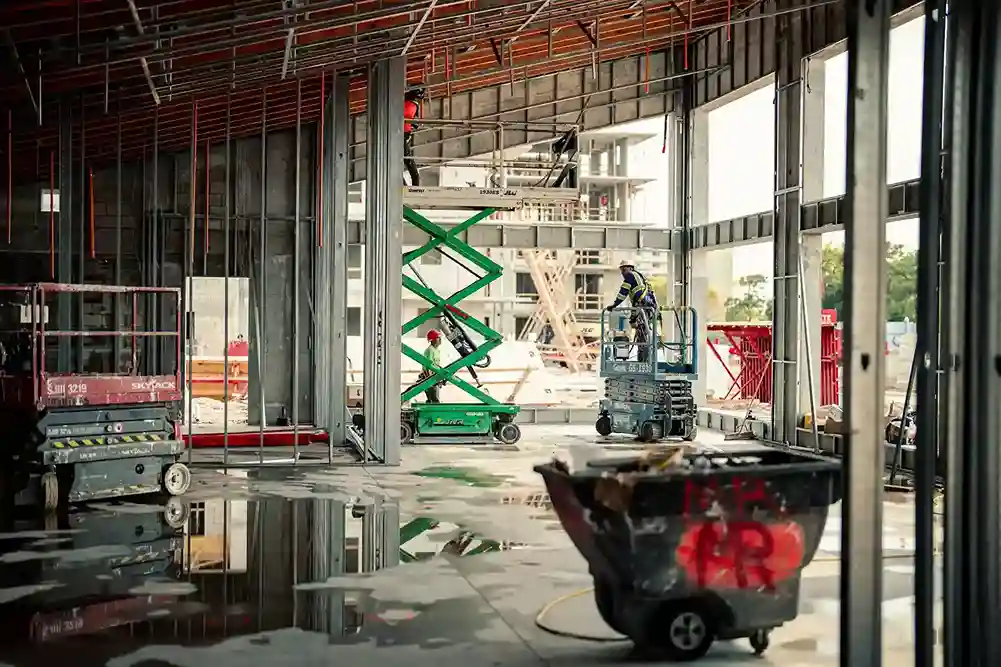
On construction sites, accidents can lead to workplace injuries, and each incident needs a report. With it, leaders can address the hazard that caused the accident and report to OSHA when needed. But near misses, instances where an incident could have occurred but didn’t, are just as important to report and track.
Near misses matter because they reveal hazards before anyone gets hurt. Each one gives leaders a clear path to removing a danger from the jobsite, and the next event could be the one that causes serious injury or even death.
In this guide to near-miss reporting, learn which data to track, what standards regulate it, and how construction teams can take corrective actions and strengthen safety protocols.
In construction, a near miss is a close call where injury, damage, or loss nearly happened, but didn’t. For example, a worker’s clothing gets caught in a machine but they’re able to pull it out, or a live wire was left out on a jobsite but nobody made contact with it. Unlike an actual accident, these events don’t harm people or property.
The only difference between close calls and recordable injuries is the outcome of the events, not the hazard itself. Contractors should still report and remediate near misses with the same level of detail and severity as real incidents, with hazard analysis, root cause investigation, and corrective actions. Otherwise, real injuries might occur.
When the worker’s clothing got caught in that machine, it could have pulled them in and caused injury or even fatality. And someone could easily have touched that live wire and experienced a serious shock.
While the Occupational Safety and Health Administration (OSHA) doesn’t legally require companies to report near misses, they highly recommend doing so to improve audit readiness and create a history of corrective action. The National Safety Council (NSC) also states that near-miss reporting improves worker safety.
Since close calls indicate when and where future accidents might happen, tracking them is a proactive safety practice. It improves hazard awareness, shows leaders where to take action, and bolsters incident prevention programs. And the more close calls appear in documentation, the more leaders can identify patterns across sites and spot hazards that might otherwise go undetected.
Near misses are also an important part of the safety pyramid framework: at the top are severe injuries and fatalities, in the middle are close calls and minor injuries, and at the bottom are unsafe acts. A lack of reports at the lower rungs doesn’t necessarily indicate a safer workplace; it could also be a sign of an inadequate reporting system.
Here are a few common near misses in construction workplaces, according to how they might happen.
An employee is working on a scaffold that has guardrails to protect them. While walking, they trip on a shifting plank, slip, and fall forward. Instead of falling over the side, the employee is able to grab onto the guardrail and have someone else pull them back to safety.
The loose plank resulted in a near miss and could have become a much more serious incident. The solution would be to secure any planks or move them out of the way. More adequate fall protection, like personal fall arrest systems (PFAS), would also help.
On a jobsite, a piece of equipment is leaking hydraulic fluid and pooling on the floor. An employee doesn’t see the liquid, steps on it, and slips. They’re able to recover their footing and continue with their work.
The hydraulic fluid on the floor became an unmarked hazard, and the slip could have injured the employee. The supervisor on-site should have noticed the leak earlier, marked the slip hazard, and made a plan for more effective walkway maintenance.
While building a house, one employee is on the first floor and the other is on the second. The higher employee is walking near an open hole and drops their drill, nearly hitting their coworker below.
In this case, the unguarded floor opening and poor tool management caused the incident. A hole cover or guardrail could keep objects from dropping through the opening, and a morning toolbox talk could remind the crew on the second floor to keep their tools away from the hole.
An employee is driving a forklift on a busy site and is starting to reverse. At the last minute, another employee runs behind the vehicle to fetch a tool, not realizing that it’s going backward, and the driver can’t see them due to a blind spot. They move fast enough to avoid a collision, but it’s a close call.
Site traffic controls and a greater awareness of visibility limitations could prevent this problem. All workers on-site should also know not to approach a vehicle unless it’s fully stopped.
A worker drills into a wall to start opening it up. Once they can see inside, they realize they’ve stopped very close to an unmarked energized circuit. Just an inch closer, and they might have tripped the circuit breaker or even been electrocuted.
All electrical circuits and equipment should be marked to avoid close calls like the one above. Utility marking, lockout/tagout procedures, and site inspections can also help.
While employees are excavating a trench, another worker drives a truck close to the opening. The vibration causes the trench wall to begin to slough while the workers are still inside, but they’re able to escape before the soil fully collapses.
This is an extremely dangerous situation, and excavation projects must have OSHA-compliant protective systems like shoring, sloping, and trench boxes.
Here’s how to document a near miss and build an effective reporting process.
Once a near miss occurs, stop work immediately and secure the hazard. This is important even when no injury occurs because any present risk could still escalate into a more serious incident.
The authority on-site, which could be a worker or supervisor, logs the incident with a near-miss reporting form. This incident report should include basic details such as the time, location, people involved, and the hazards or conditions that led to the event. The goal is to document as much as possible while the information is still fresh in witnesses’ minds.
Add photos and extra notes to the form to help future readers understand what happened. Many safety apps include voice-to-text input for speed and accuracy.
Finalize the report, and submit it to relevant parties. An effective safety system should automatically notify supervisors and safety managers so they can review the information and act as soon as possible.
Once supervisors have the near-miss incident report in hand, they can analyze the events and perform a root cause analysis. They should focus on the conditions, like the environment, equipment, or process, that made the incident possible, rather than the actions people took. This is because people will always make mistakes, but their environment and tools stay constant.
The first goal should always be to eliminate the hazard. But if that’s not possible, aim to find a safer alternative, engineer the risk out of the environment, or apply administrative controls, in that order. Using more personal protective equipment (PPE) is also a possibility, but it should be a last resort because it acts as a barrier instead of removing the hazard.
After taking corrective actions, supervisors can formally close the incident. The entire process should be documented for future reference and potential OSHA audits.
Paper forms, individual texts and calls, and incident spreadsheets are outdated, and it’s easy to lose track of near misses without a cohesive system. Miter Safety brings the reporting workflow into one mobile app so crews can handle everything from field ops to reports in a single place.
Here’s how Miter Safety works:
Miter Safety leads to more accurate reporting, transparent action, and a stronger safety culture. And when crews see their close calls get investigated and fixed, they keep speaking up, which makes for a better employee experience for everyone on and off site.