


Industrial and Commercial Contractor
How Benchmark Construction Company Is Improving the Employee Experience with Miter Performance

Company profile
220 employees
Working in
Pennsylvania
Maryland
New Jersey
- 3 review cycles
Tailored to office, field, and superintendent roles
- 220 employees
Supported by a four-person Leadership and Culture team
- 30+ direct reports
Reviewed in one place by some field managers
- 5 automated touchpoints
For new hires, from the first week to six months
Products Used
Integrations Used
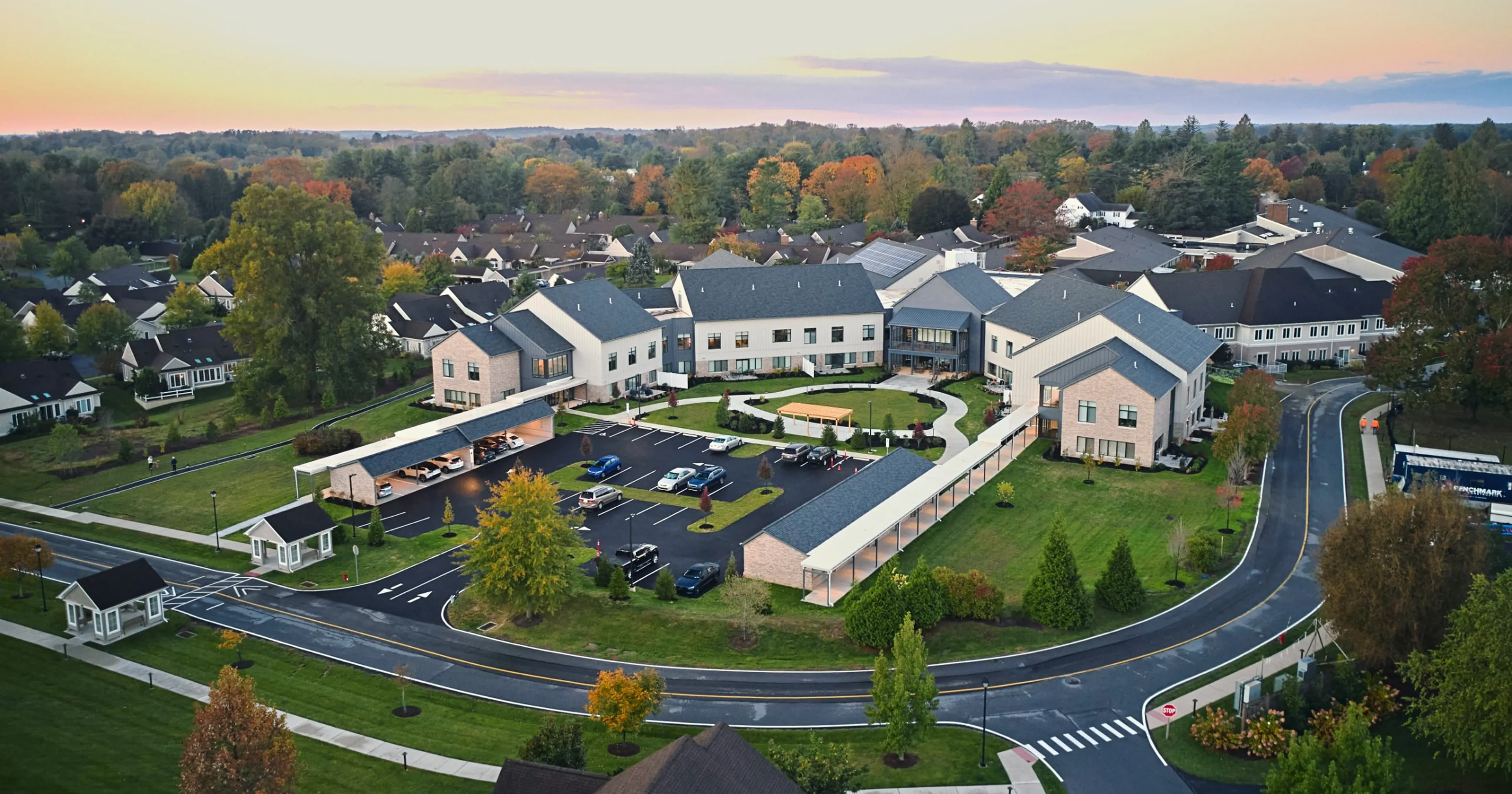
Benchmark Construction Company is a second-generation, privately held family business that has been operating as a general contractor for 41 years. Headquartered in Ephrata, Pennsylvania, with a regional office in Ellicott City, Maryland, Benchmark works across Pennsylvania, Maryland, and New Jersey. The company primarily builds commercial projects, including healthcare, senior living, higher education, and multifamily. Benchmark has about 220 employees, supported by a four-person Leadership and Culture team that handles payroll, benefits, talent acquisition, training, engagement, and performance. Angela Hendrix, Vice President of Leadership & Culture, leads that team and is passionate about training, development, and performance management. Alicia Weaver, Talent Acquisition & Engagement Specialist, has spent nearly 10 years in talent acquisition, including the last five in construction. Along with college recruiting, she supports performance and engagement.
Key takeaways:
- Before Miter, Benchmark ran performance reviews entirely by hand, using Word documents and OneNote, which led to inconsistency across managers and constant need for follow-up.
- Benchmark wanted performance in the same system as payroll and HR data, so Miter Performance was a natural fit as they were moving onto Miter.
- Benchmark now runs three tailored review cycles: an office cycle on the fiscal year, a field cycle on employee anniversaries, and a superintendent cycle.
- Field employees complete reviews on the Miter app, and automated reminders have replaced much of the team’s manual follow-up.
- Managers and the Leadership and Culture team can now capture feedback and shoutouts throughout the year, and starting with the next cycle, that feedback will pull directly into performance reviews.
- Features like AI summaries, compiled peer reviews, and employee work profiles have won over field managers, including the most hesitant field manager who coincidentally has the most direct reports in the organization.
- Benchmark plans to automate quarterly check-ins and use performance data to support raises, promotions, and documentation.
The challenge: A manual review process in a system that wasn’t built for it
Leadership is one of Benchmark’s core values, and for Angela, better feedback is one of the most direct ways to put it into practice. “We have a huge emphasis on leadership. It’s one of our core values, so finding ways to enhance performance and give our teammates better feedback is one way we know we can strengthen our teammates and ourselves as an organization,” she says. Feedback is also what Benchmark’s employees ask for most.

“Regardless of industry or organization, it’s the number one thing we hear from both new and tenured employees. People want to understand where they’re hitting the mark or missing the mark, what they need to do to get better, and what they need to do to grow.”
Angela Hendrix
Vice President of Leadership & Culture, Benchmark Construction Company
Before Miter, the process behind that feedback was entirely manual. Reviews lived in Word documents, and managers used OneNote to organize them by team and individual. “The system was really clunky. It was very hard to maintain, and the entire thing was manual,” Angela says. “There was a lot of inconsistency in how managers were doing things because they had a lot of freedom since it was manual.”
Shoutouts and feedback during the year were manual too. Someone would email or call a manager, and the manager would log it in OneNote. Employees couldn’t easily see that feedback, and access was confusing even for the Leadership and Culture team. “I had access to OneNote, but it was such a weird system for how you got access and who could see what,” Alicia says. “When employees would change managers or teams, we had to drag entire folders of files to new teams in OneNote because of permission settings. It was incredibly inefficient,” Angela adds.
For field employees, the review form wasn’t in an app. Alicia would send a form they could try to fill out in a web browser on their phones, or they would have to ask someone to print it and then find someone to scan it. The team then spent a lot of time following up to get reviews done.
The biggest bottleneck came after reviews were in. Angela personally read every review to pull out feedback on the organization and themes for individual growth. “I had to manually click into every single file and read every single thing,” she says. With the rest of her workload, that took three to three and a half months, and putting changes into practice took several months more.
The solution: Performance in the same system as payroll and HR
Benchmark was also looking for a new payroll system, and the team wanted everything connected. The timing worked out since Miter was launching Miter Performance just as the team was looking for a new solution.
“We wanted our systems to all talk to each other, so we were really reluctant to have a performance management system separate from payroll and our HR data. Miter allowed us to bring all of that together and make it much more seamless.”
Angela Hendrix
Vice President of Leadership & Culture, Benchmark Construction Company
Building the review cycles on the back end was intuitive, and the lift for managers was light. Angela credits the Miter team for keeping an open line of communication throughout. “Spencer, Varun, and the entire Miter team were incredibly accessible to us. I probably had a billion questions and reached out multiple times, and they were always willing to hear our feedback,” she says.
Benchmark started with a small group of field employees in early summer, then launched its first office cycle in late August or early September. Setting up the cycles was quick, and Alicia built the field cycle herself, making small adjustments along the way. “You make little edits as you go to make sure it works well, but it’s very easy to follow. Do this, then do this, then do this,” she says.
Outcome #1: Review cycles built for each role
Benchmark’s field teammates are reviewed on their work anniversaries, while office teammates follow the fiscal year. In Miter, the team set up an office cycle, a field cycle, and a superintendent cycle, each with questions tailored to the role. “The folks in the field don’t do the same thing as the folks in the office, so we shouldn’t be asking the exact same questions on their performance,” Angela says.
The office cycle took about four to five weeks. Employees completed self-reviews and nominated peers, peers gave feedback, and managers completed their reviews. Each manager then met in person with every direct report, logged the meeting notes, and shared the completed packet.
While Benchmark built its cycles around these schedules, it can still adjust when needed. Admins can move cycle dates around vacations or demanding projects. “It has the flexibility built into it from an administrative side. That’s really helpful,” Angela says.
Peer selection has been one of the biggest improvements for the field. A carpenter could work on 10 different projects in a year, which made it hard for managers to know who to ask.

“Asking employees who they feel they worked with enough to give good feedback is really helpful, but so is being able to add our own. So if a manager says, ‘I really want to know what this superintendent thinks,’ being able to add that is great.”
Alicia Weaver
Talent Acquisition & Engagement Specialist, Benchmark Construction Company
Outcome #2: Reviews field teams can complete from their phones
Most field employees don’t have a company-issued device or sit in front of a laptop, so they now complete their reviews in the Miter app, and they can use talk-to-text instead of typing. Automated reminders handle the follow-up the team used to do by hand. “For a group that’s not necessarily on technology all the time, I’ve heard no real complaints about how easy it is to do on their phone,” Alicia says. The reminders made an impression in the office as well, where one of the comments Angela heard most during the office cycle was, “Miter texts me more than my wife does!”
The team expected the most pushback from field managers, but that wasn’t the case. “Our field managers quite honestly love this, and we were most worried they were going to be the most resistant, but they’ve been really receptive,” Angela says.
The biggest change of heart came from Benchmark’s Field Operations Manager. He oversees all of the company’s carpenters, a large self-perform unit, and was hesitant to change the process.
“He has said multiple times this system is so much better. Everything’s in one place. It has reminders. You can see who’s doing what they’re supposed to be doing and who isn’t in terms of what’s owed in performance. The AI summary is incredibly helpful.”
Angela Hendrix
Vice President of Leadership & Culture, Benchmark Construction Company
Field managers can also see each employee’s work profile alongside the review, including overtime, PTO, their last raise, and the jobs they code their time to. “That makes their life so much easier, especially when they have a lot of direct reports,” Angela says.
Outcome #3: Feedback captured all year, not just at review time
Benchmark recently turned on feedback in Miter, so managers and the Leadership and Culture team can log shoutouts and feedback as it happens. Starting with the next cycle, that feedback will show up when managers build their reviews. That matters most for field teammates, who move from job to job and from leader to leader throughout the year.
“It’s important for us to capture feedback when it’s happening, rather than waiting until the end of the year or when your anniversary is approaching and then asking people for feedback on what you did 10 months ago. They’ll say, ‘I’ve been with 15 other people since then.”
Angela Hendrix
Vice President of Leadership & Culture, Benchmark Construction Company
Employees also have access to their own performance information now, which they didn’t have with OneNote, and Alicia can see when a new hire gets a feedback shoutout. “Being able to see that is really cool, versus it just being put in their OneNote for no one else to see,” Alicia says. She also uses Miter Performance to automate new hire surveys at the first week, 30 days, 90 days, and six months, along with a mentorship survey. Responses come to her for approval, and she shares them with managers. “I don’t need to put that on my calendar to send and then go file. It all just happens automatically,” she says.
Outcome #4: Less work on the back end
Kicking off reviews was fairly straightforward for Benchmark. The tedious part was the follow-up and compiling everything afterward, for both managers and the Leadership and Culture team.
“It’s all the follow-up that was taking us a long time. For managers, it’s compiling all the feedback, reaching out to people for feedback, and digging through all their notes to make sure they have everything. Miter pulls it all together really seamlessly.”
Angela Hendrix
Vice President of Leadership & Culture, Benchmark Construction Company
Benchmark still gives each cycle the same amount of time, but the workload is lighter. “It’s taking less time to compile everything and send the reminders. The workload on other people’s plates is much smaller than it was in the past,” Angela says.
Angela is now using Miter to aggregate reviews for her year-end analysis, which starts after the fiscal year closes on September 30. She still plans to read every review, but finding what she needs is already faster. “It is so much easier already to click through things and find things,” she says. The goal is to shorten the time between collecting feedback and putting new tools, processes, and training in place. “You can’t just tell people they need to get better and then walk away. We want to help them do that,” Angela says.
The impact: Consistency and transparency the team can see
Angela sees performance as one of the clearest ways Benchmark puts its culture into practice.
“I think some of the most important things are consistency and transparency. Miter allows us to have a consistent process. It allows us to be transparent with people about what they’re doing well, why they deserve a raise, or where they need to improve to get that raise.”
Angela Hendrix
Vice President of Leadership & Culture, Benchmark Construction Company
For Angela, that is what makes a culture real. “Culture isn’t just what you say you do. It’s how you act every day,” she says. “You can put values on a wall. You can say you care about helping people grow. You can say you care about feedback, but if you’re not going to do those things, those values don’t mean anything.”
After the current cycle, Benchmark plans to automate quarterly check-ins in Miter so managers and employees review development goals throughout the year. The team is also moving toward using performance data to support raises, promotions, and documentation. “Miter will allow us to do that more easily than we’ve ever done it before,” Angela says.
When asked what she would tell a peer about Miter Performance, Angela keeps it simple. “It has helped us be consistent. It’s helped us save time, and it’s been easy for our team to use,” she says. Alicia agrees, pointing to how easy the system is for everyone. “The emphasis for me is definitely the ease of use. Miter is not difficult to use as an employee, a manager, or an administrator,” she says. Angela also points to the relationship behind it.
“Miter’s been truly a partner to us. We don’t feel like it’s a vendor saying, ‘Nope, this is the way the system is, it’s black and white, and you can only do this.’ They’ve truly been a partner outside of performance as well, helping us make the system work for our team.”
Angela Hendrix
Vice President of Leadership & Culture, Benchmark Construction Company
With Miter, Benchmark has a performance process that matches what it values, giving every teammate, in the office or the field, the feedback they need to grow.
Share this article
Frequently asked questions
Ready to supercharge your back office?
Get a demo Get a demo