




Commercial Plumbing
How Miter Helps MJ Mechanical Simplify Payroll and Field Operations for 300+ Employees

Company profile
300+ employees
Prevailing Wage
Working in
Texas
- 30 hours/week
Saved on payroll processing alone.
- 2x headcount
Growth in 18 months.
- 1 hr → 20 min
Employee onboarding, start to finish.
Products Used
Integrations Used
Partners
MJ Mechanical is a commercial plumbing contractor based in Texas, building everything from high-rises and hotels to grocery stores and schools across Dallas, Austin, and San Antonio. The company has been in business for more than 30 years, earning a reputation for quality and reliability across the Texas market. When Chad Anselmo and his partners at Lionshield Holdings acquired MJ Mechanical in February 2024, the company had about 175 employees. Josh Churchill had been running field operations at MJ Mechanical for nearly two decades and stayed on board with the acquisition. In roughly 18 months, they nearly doubled to more than 300 employees.
Key Takeaways:
- Nearly doubling headcount from 175 to 300+ employees in 18 months exposed significant gaps in MJ Mechanical’s payroll and field operations processes.
- The previous payroll system experienced multiple days of downtime with every payroll run, randomly deleted checks, and produced unreliable totals, making cash flow forecasting nearly impossible.
- Payroll staff were spending approximately 30 hours per week on payroll-related issues alone, working late nights and repeating manual steps every pay period.
- Miter replaced a disjointed, manual process with a single platform covering payroll, time tracking, job costing, field operations, onboarding, per diems, reimbursements, and expense management.
- Geo-fencing and real-time workforce visibility gave field leadership the tools to keep crews on the right jobs, at the right locations, and on budget.
- Job costing in Miter eliminated the Excel-based manual workarounds previously used to allocate labor hours, with everything now flowing automatically to jobs and into Sage Intacct.
- Onboarding time dropped from an hour and a half to 20 minutes, and bilingual English/Spanish support removed a longstanding barrier for the field workforce.
- MJ Mechanical’s experience with Miter was strong enough that Lionshield Holdings has begun rolling the platform out across its broader portfolio of companies.
The Challenge: A System That Couldn’t Keep Up with Growth
As headcount scaled rapidly following the acquisition, the previous payroll system couldn’t keep up. It experienced multiple days of downtime every time the team ran payroll. Checks were randomly deleted. The number submitted to the payroll provider didn’t reliably match what came out of the bank account, making cash flow forecasting nearly impossible.
It was a stressful and tedious situation for the team. “There were a lot of times our team stayed up until midnight trying to get checks printed. It wasn’t a good process,” says Josh.
Staff were spending roughly 30 hours per week on payroll-related issues: reviewing timesheets, correcting errors, reconciling the accounting system, and double- and triple-checking everything before each submission.
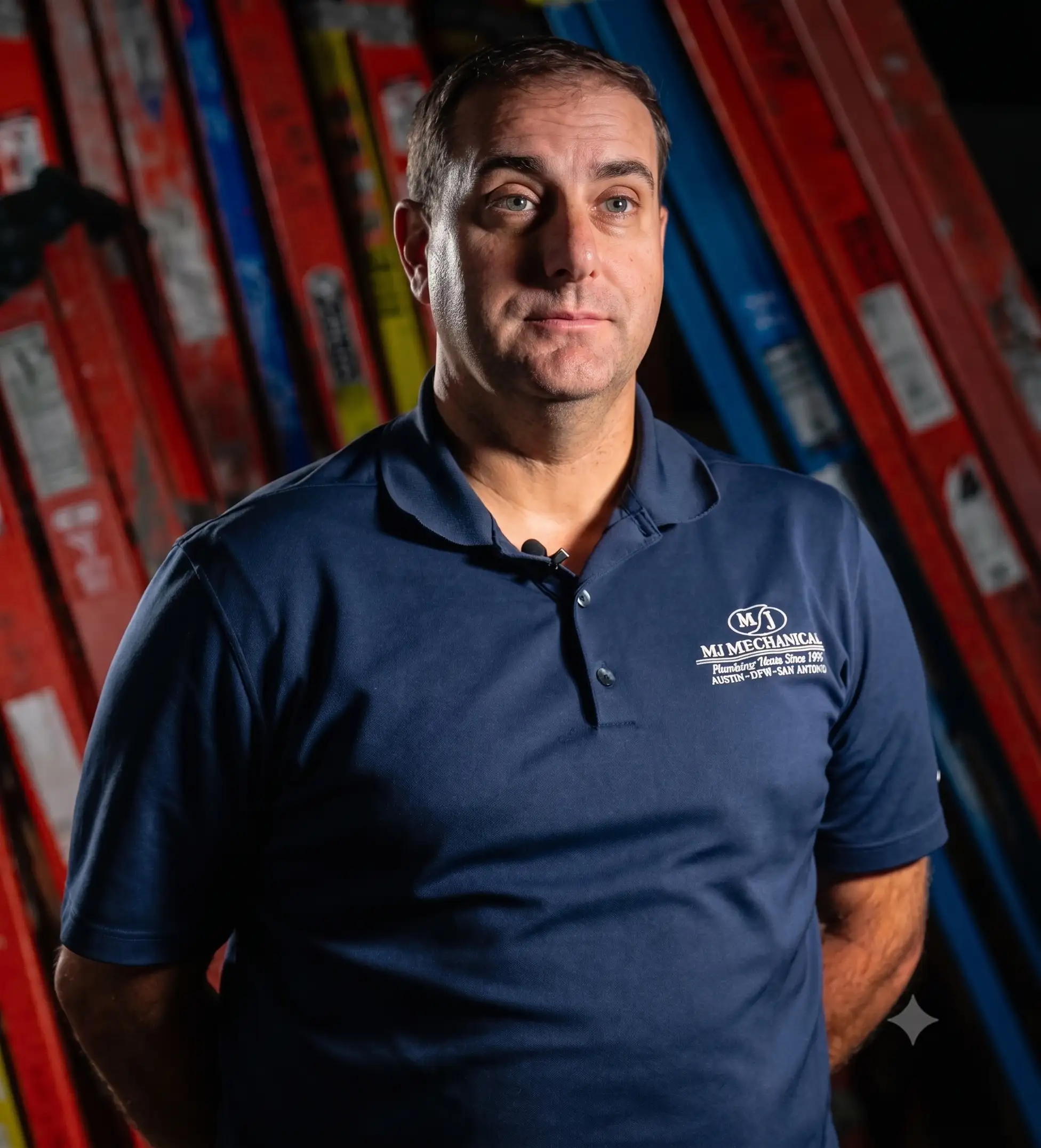
“I think on one payroll run, we had a third of our people not even paid, and at that point you realize this is not sustainable going forward.”
Chad Anselmo
Managing Partner, Lionshield Holdings
Job costing was a separate manual process entirely. Labor hours had to be downloaded, sorted in Excel, and allocated across individual jobs. Accounting liabilities and accruals had to be entered separately to keep the balance sheet current. In the field, the picture wasn’t any cleaner. The previous time tracking app was accurate only within 350 yards and available only in English. Before Miter, there was no way to verify where crews actually were when they clocked in or out.
When Chad and his team decided to look for a replacement, they made a specific list of requirements: geofencing, multi-level sign-off, integration with their accounting and construction management software, reliable uptime, and strong reporting. They knew a generic payroll tool wasn’t going to cut it. They needed something built for construction.
The Solution: One Platform for Payroll, People, and the Field
MJ Mechanical found Miter through their Sage Intacct integration. BakerTilly, their tech partner who led their Sage Intacct rollout, recognized MJ Mechanical’s construction-specific needs and connected them with Miter.
Miter had everything MJ Mechanical were looking for: geofencing, multi-level sign-off, a direct API connection with Sage Intacct, and a platform built specifically for construction rather than adapted to it.
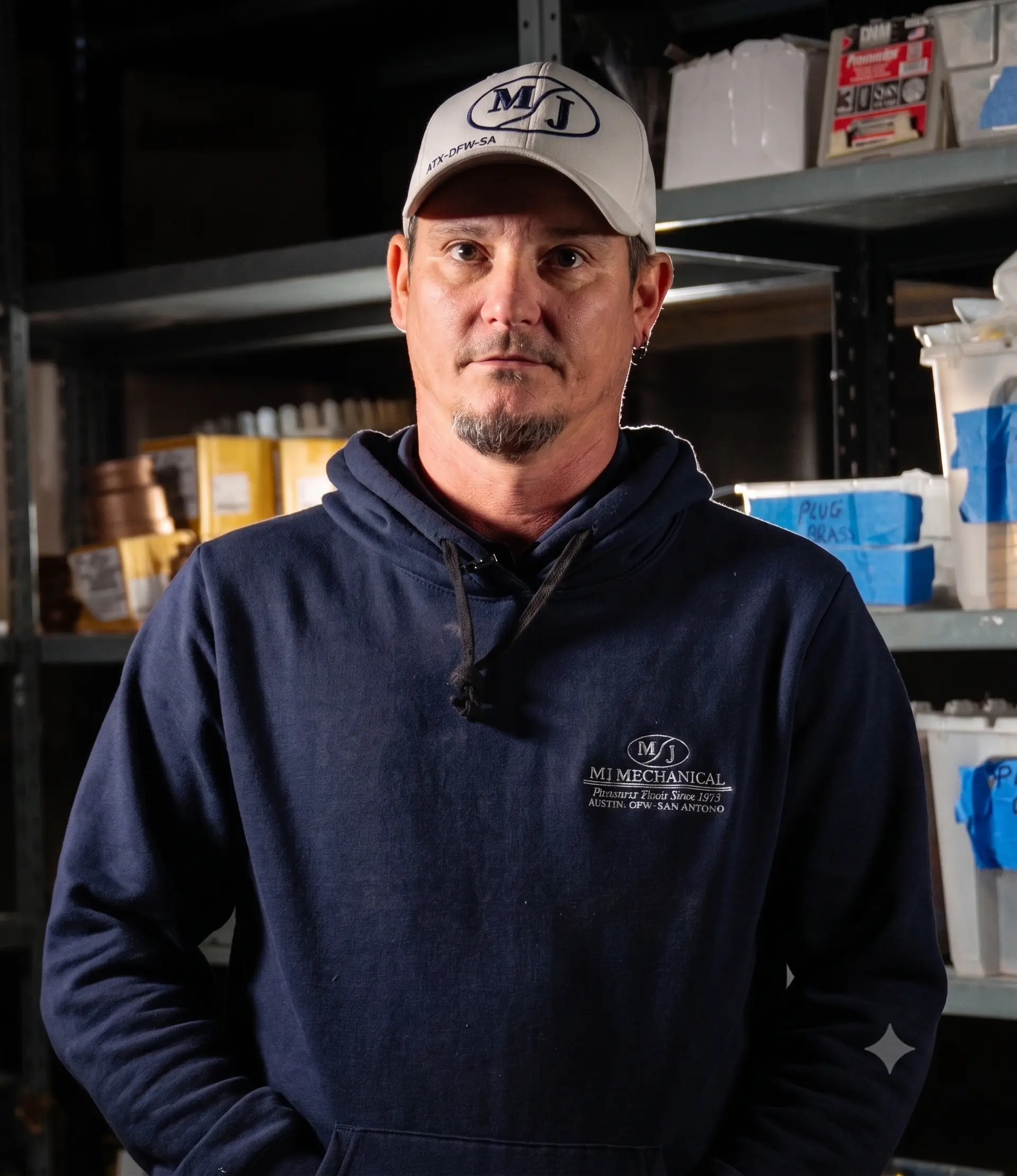
“Miter does what it says, and it’s very easy to use.”
Josh Churchill
Director of Field Operations, MJ Mechanical
Today, all 300+ employees across Dallas, Austin, and San Antonio run through Miter for time tracking, payroll, job costing, onboarding, per diems, reimbursements, and HR. The Sage Intacct integration is live and a Procore integration is in progress.
Outcome #1: Payroll That Actually Works
Miter removed the manual steps that had been consuming roughly 30 hours per week. Employees clock in and out on their phones, time flows directly into payroll, and the cycle that once required running numbers, reconciling against the accounting system, and pushing everything to a separate provider now runs in one system.
The change shows up in how the team operates day to day. “The office team is definitely less anxious about payroll time. Everything has gotten streamlined. We can have a part-time person just making notes and little changes, and then when we submit the payroll, Miter takes care of all that,” says Josh.
“The most impactful thing about Miter is trimming down the amount of time to do payroll.”
Chad Anselmo
Managing Partner, Lionshield Holdings
With payroll running weekly for 300+ employees, getting the payroll number in advance has also changed how the team manages cash flow. “What can I do now that I couldn’t do before? Get a payroll number two weeks early. That’s our biggest thing. Knowing that number ahead of time allows us to move and do things a certain way to make sure that our guys are paid and they’re happy,” says Josh.
Outcome #2: Field Visibility and Accountability
Managing crews across multiple active projects used to mean working with incomplete information. The previous app couldn’t tell you where someone actually was when they clocked in. Before Miter, paper timesheets were the norm and they were easy to manipulate.
“Paper timesheets were crazy. It was a free-for-all. There was no verification. People were just putting down whatever hours they wanted. They’d work 30 hours, and put 60,” Josh says.
Geofencing in Miter locks clock-ins and clock-outs to within a defined radius of the actual job site, so crew members can’t clock in or out from the road.
“I can put a block around the jobsite that will not let you clock in or out more than a mile away. It really caught the guys that were driving home before clocking out. That stopped very quickly, which saved us a lot of money.”
Josh Churchill
Director of Field Operations, MJ Mechanical
Josh can now see in real time how many people are clocked in at each site, whether headcount matches what the job needs, and where to move crews to stay on budget. He can also drill into overtime by job and spot where hours are running hot before the end of the month.
“Nobody likes to talk about it, but time theft is a big thing in the construction industry and Miter really cuts down on it. It can save you a lot of money,” Josh says.
Outcome #3: Job Costing Without the Manual Work
With Miter, employees log time against specific jobs as they clock in. Those hours flow automatically into job cost reports, giving leadership a current view of where money is being spent on every project, broken out by phase: whether underground work, top-out, or furniture and fixtures. The integration with Sage Intacct pushes GL entries into financial reporting without duplicate entry, so the numbers the finance team sees match what happened in the field.
Before, getting labor costs into jobs meant downloading reports, sorting them in Excel, and entering accounting liabilities by hand. “We’d have to use Excel to be able to put all the different time buckets into various jobs, and now with Miter that all just happens automatically,” Chad says.
“Using Miter to job cost is really helpful because we’re able to take all the hours as well as all the costs and put them into the job so that we can drill down and see where in the job it’s costing us the most money.”
Chad Anselmo
Managing Partner, Lionshield Holdings
For a company running projects across three markets with 300+ employees, that kind of visibility matters. Chad can see where costs are stacking up on any job, catch overruns by phase, and use that data to bid future work more accurately.
Outcome #4: From Onboarding to the Field, One Platform That Works
Before Miter, onboarding a new hire took an hour and a half. Now it takes about 20 minutes. A new employee’s cell phone number gets entered, a link gets texted out, and they complete direct deposit setup, banking information, and all required documentation on their phone. With headcount growing as fast as it has, that time savings adds up quickly.
Being able to use the platform in both English and Spanish has been equally important. With Miter, employees navigate the app in their preferred language, including the fit-for-duty acknowledgments required at clock-in and clock-out. “The old software did not translate anything in Spanish. With Miter, the fact that it comes in Spanish and English really helped out a lot. That way everyone knows what they’re signing and what they’re looking at,” says Josh.
The same ease extends to features like per diems. For crews traveling to out-of-state jobs, per diems are configured once and processed automatically each week without any additional steps. Josh also uses Miter’s reimbursements feature for truck allowances and jobsite purchases. What used to require manual tracking now runs through the same platform as everything else.
“The field team transitioned very well to Miter. We have a lot of guys who are not technology-savvy, and it has been seamless for them. They clock in easily, stay on the right job, and clock into the right place.”
Josh Churchill
Director of Field Operations, MJ Mechanical
The Impact: A foundation for a growing portfolio
With Miter, payroll now runs cleanly every week, field crews clock in to the right jobs at the right locations, and new hires are onboarded in 20 minutes. The back-office work that once consumed days of staff time each week now happens automatically.
The confidence in Miter runs deep enough that Lionshield Holdings has rolled the platform out to another one of its portfolio companies and is evaluating it for the rest of its companies as well. When asked what would happen if Miter disappeared tomorrow, neither Chad nor Josh hesitated.
“If Miter disappeared, it would set us back about a year and a half. I don’t care for that.”
Chad Anselmo
Managing Partner, Lionshield Holdings
“If Miter disappeared, I doubt we would get payroll out before Thanksgiving. That would be a big ball of stress.”
Josh Churchill
Director of Field Operations, MJ Mechanical
With Miter, MJ Mechanical has the platform to keep paying people right, managing the field, and growing without back-office bottlenecks holding them back.
Share this article
Frequently asked questions
Ready to supercharge your back office?
Get a demo Get a demo