
8 ways to reduce labor costs without cutting headcount
Blog
Expense management

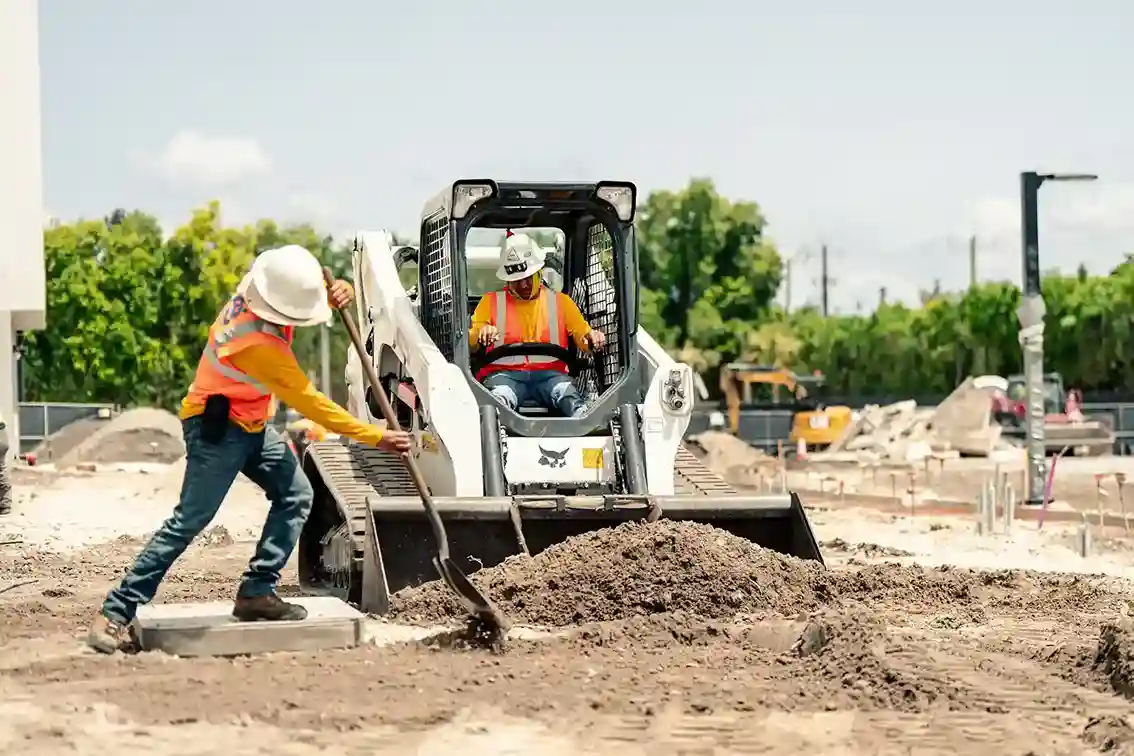
Construction labor productivity is one of the most persistent efficiency challenges operations leaders face. Keeping projects on track requires a structured, consistent method of measuring hours worked against actual labor output. Otherwise, crews can get off track in the middle of jobs or performance can fall below expectations before leadership can step in.
In this guide to labor productivity for contractors, learn how to measure and improve this metric across projects.
Labor productivity is the ratio between output and input. It measures complete work against the resources required to produce it. Output can include any consistent, quantifiable measurement of completed work, such as finished square feet or placed units. Input is typically measured in hours or cost.
Imagine a crew installs 500 square feet of drywall in 25 hours of actual labor. That means they complete 20 square feet per labor hour, which is how productive they are.
Tracking labor productivity is critical to:
Unlike overall project productivity, which tracks broader metrics like profitability and schedule performance, labor productivity is specifically about how efficiently crews convert labor hours into completed work.
Calculating labor productivity is relatively straightforward, but it requires detailed and consistent tracking methods. Here are the key steps contractors can take to calculate construction productivity rates for labor.
Contractors need to identify a measurable unit of work they can track consistently throughout the project. The actual unit often depends on the trade, and may include:
Regardless of the output unit itself, teams need to use the same metric throughout the project to keep their calculations consistent and trackable over time.
Next, contractors need to track the number of hours with the associated unit of output. Capture total hours worked by all crew members performing activities for that specific scope of work.
This is especially important when it comes to differentiating between direct labor hours (e.g., installation work or fabrication) versus indirect labor hours (e.g., travel or cleanup). Time tracking errors inevitably lead to poor job costing and incomplete information. Without clearly tying the right hours worked to the right task, contractors will quickly over or underestimate teams’ real productivity levels. As a result, future project bids will be inaccurate, affecting contractors’ bottom line.
Once contractors have tracked their chosen metrics, they’ll calculate productivity using this formula:
Output / Labor hours = Labor productivity
Let’s say a framing crew installs 400 linear feet of drywall in 40 total labor hours:
400 / 40 = 10
That means the crew installed 10 linear feet per hour of labor.
Once a contractor has a number, they can compare it to their initial estimate or budgeted unit rate. If the budgeted productivity was eight square feet per hour, but the actual productivity was six per hour, that suggests the crew is less efficient than expected.
While many firms use industry databases to compare their productivity rates to benchmarks, it’s more effective to use historical company data because that accurately reflects real field conditions and workforce realities.
Conditions outside the crew’s control frequently impact project timelines and productivity. Considering common external factors can help firms analyze productivity more accurately. These commonly include:
There’s more than one way to calculate labor productivity on a construction site, each with its own unique advantages. Below are a few options.
Unit rate is essentially the reverse of the formula above, and it requires dividing labor hours by the number of units installed. Unlike in the previous calculation, a lower unit rate reflects higher labor productivity.
In this case, 40 labor hours and installing 400 linear feet of drywall would look like this:
40 / 400 = 0.10
Miter’s Field Productivity reports rely on this calculation.
This approach requires comparing budgeted (earned) labor hours to actual hours. It can be a helpful tool for evaluating the quality of project forecasts.
For example, if 80 hours were budgeted for a particular activity, but it actually took 100 hours to complete, that means the crew’s input is higher (and therefore less efficient) than anticipated.
The productivity factor (PF) converts earned hours versus actual hours into a ratio, providing a consistent index through which to compare across other projects and tasks. The formula for PF is:
Earned hours / Actual hours = PF
Continuing the example above, the calculation would look like this:
80 / 100 = 0.8
In general, a PF of 1.0 means productivity is on target. Over 1.0 means efficiency is better than expected and lower indicates underperformance.
Work sampling involves evaluating productivity via periodic observations of worker activity and recording whether activities are productive, supportive, or idle. While this doesn’t measure production quantities directly, it can help contractors identify inefficiencies such as workflow disruptions or waiting periods.
Boosting productivity can improve cost efficiency and even support smarter construction hiring and workforce planning. Here are some best practices to follow.
Productivity issues often start before crews ever set foot on the jobsite. Poor construction planning can quickly introduce inefficiencies that undermine productivity.
A detailed preconstruction plan can:
Well-trained workers can complete activities more efficiently and produce higher quality work with less supervision. With this in mind, create initiatives like trade-based skills development, technology education programs, and equipment certifications.
A strong safety culture reduces incidents, avoids downtime and stoppages, and provides crews with the information they need to approach tasks confidently.
Building a safety culture requires:
Material shortages are one of the most common reasons tasks get delayed. Improving supply-chain management helps materials show up on time and coordinates deliveries with more accurate sequencing.
Trying to track productivity manually often results in inaccurate numbers and wasted time on data entry. Instead of spreadsheets and paper notes, construction-specific software can help field leaders identify issues before they impact performance. This includes tracking labor hours and production quantities, creating productivity reports, and analyzing productivity trends in real-time. Firms can even choose software that combines field and back office data, which streamlines everything from payroll processing to labor compliance.
Construction firms can only manage their productivity rates when they have accurate information. Field leaders need to capture outputs and inputs in detail and consistently across projects to get a realistic picture of productivity.
Firms can use software to capture useful productivity data at the cost-code level, ensuring that hours and unit quantities are logged to specific activities rather than entire jobs.
With the right software, an automatic field productivity report can compare budgeted versus actual unit rates, percent complete, and hours consumed. This helps catch inefficiencies before they impact the project.
For example, if a report shows an activity is 40% complete but it’s already exceeded 60% of its estimated labor, then field leaders know that they’re facing overruns, providing a trigger to investigate the root causes and take corrective action.
Good record-keeping helps field operations leaders make more informed decisions while also minimizing confusion and miscommunication. It’s also a critical part of staying audit-ready in the event of an internal or external compliance investigation.
Document key processes like:
Construction companies that rely on fragmented tools to track productivity face major barriers. If leaders keep hours and production quantities across spreadsheets and generic payroll reports, calculating productivity becomes time-consuming and error-prone.
Miter supports unified Time Tracking and Production logging all in the same intuitive platform. Operations leaders can monitor quantities in real time and automatically compare them against cost codes through the mobile app, daily reports, or digital timesheets. This data then flows directly into Field Productivity reports, giving contractors a complete view of the critical information they need to improve Field Operations across projects.
Production is the total volume of work, while productivity is the efficiency at which labor produces that work.
Overtime can increase total production, but excessive overtime for one crew can actually reduce productivity by causing fatigue and increasing the risk of errors, which also impact the employee experience and increase turnover.
While direct labor is the work that produces the output, indirect labor refers to work that supports that production. This often includes supervision, travel, and site cleanup.
Yes, construction-specific software like Miter can calculate productivity automatically as long as inputs and outputs are trackable in the system.
A good rate can vary depending on the trade and specific project conditions. The rate for wall framing may lie between 10–20 linear feet per hour, while hanging drywall may land between 20–40 square feet per hour.
Determining the ideal productivity rate for a particular activity usually involves researching industry data through databases like RSMeans and internal benchmarks like initial estimates and historical project data.