Construction safety leading indicators: What to track and why
Blog
Safety

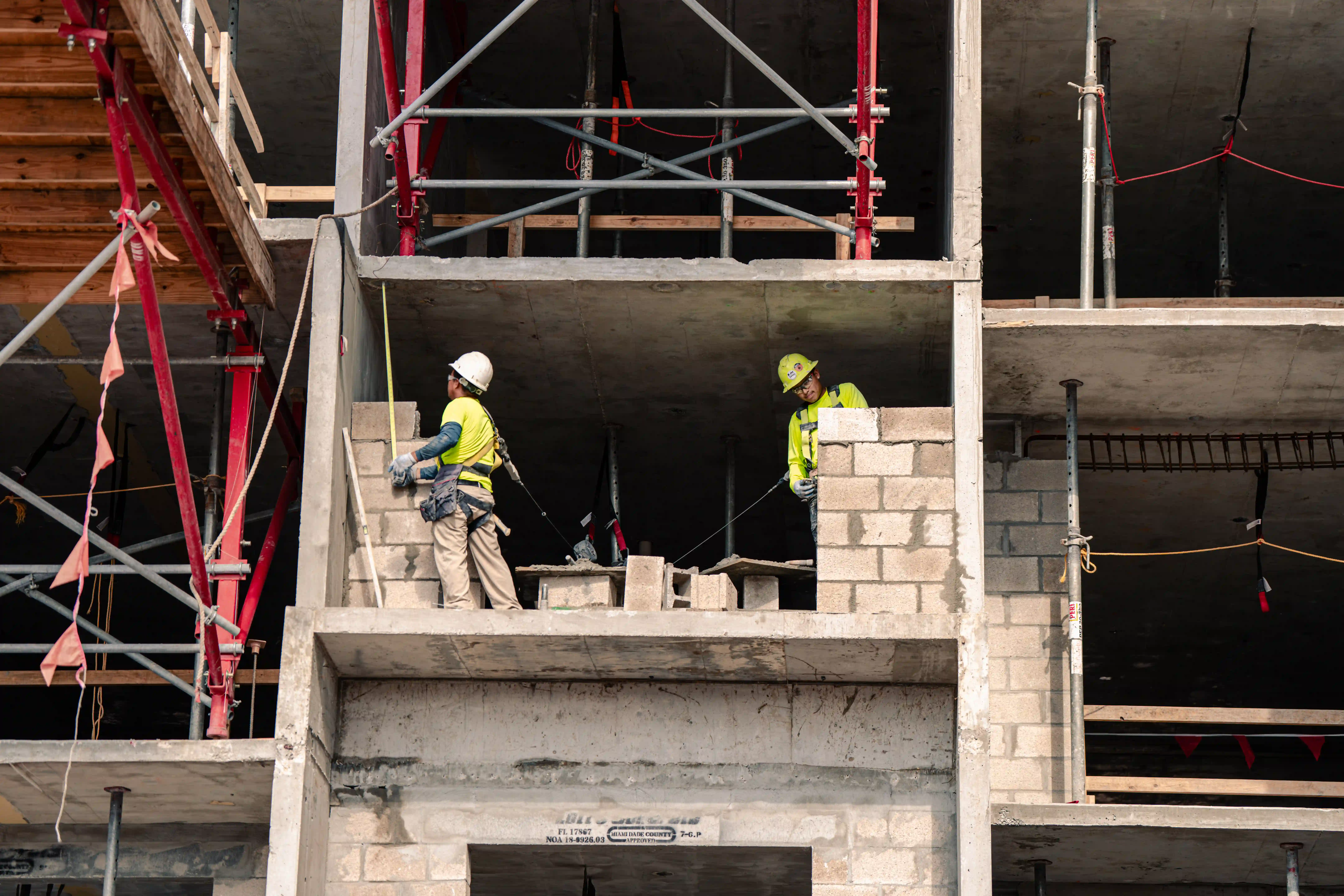
A job safety analysis (JSA) is a construction practice that operations leaders use to make a dangerous industry significantly less dangerous. This defined procedure documents and mitigates potential hazards before they become real accidents and injuries.
While construction regulations don’t specifically require JSAs, there are certain Occupational Safety and Health Administration (OSHA) standards that nearly make them mandatory. This disconnect means operations leaders might not know when they have to complete JSAs, especially when they’re managing multiple projects and crews.
Further, it gets harder when contractors manage multiple crews across multiple projects and jobsites. JSAs go stale fast, and foremen often end up working from outdated versions while the office has no reliable way to confirm which crew has the current one.
This guide explains what a JSA in construction is, when leaders use them, and how to conduct an analysis that protects crews and holds up under OSHA scrutiny.
A JSA is a systematic process for documenting and addressing potential hazards associated with specific tasks of a construction job. It’s also called a job hazard analysis (JHA). The goal of these assessments is to identify the hazards in a specific task before crews start work and decide how to control them.
Every complete JSA looks for hazards across these areas:
While there’s no standardized JSA form for construction that every contractor uses, a typical JSA form outlines the steps involved in the task, the potential hazards identified, and recommendations for controlling the risk.
Conducting a JSA isn’t a one-and-done deal. Whenever there’s a change in task conditions, crew, or equipment, operations leaders should review and update the JSA to reflect the changes.
A JSA is similar to a general safety inspection but not identical. While general safety inspections search for violations already in place, JSAs are proactive analyses that aim to mitigate potential issues for specific tasks before they occur.
Another related practice is job safety and environmental analysis (JSEA). This examines the environment crew members work in and gauges potential risk. Though some people use JSA and JSEA interchangeably, they’re not the same thing. JSEAs review environmental risks in addition to health and safety concerns.
There’s no hard requirement for JSAs, meaning they aren’t legally mandated. But there are several strong reasons operations leaders include them in their worker safety programs:
While JSAs may not appear in official OSHA rules, other standards make them essentially required in practice.
For example, OSHA’s General Duty Clause requires contractors to maintain a safe work environment by keeping it free of recognized hazards. Further, OSHA’s Fall Protection Clause (29 CFR 1926.502(k)) requires some employees to write a fall protection plan when they aren’t able to use the proper equipment, and this document functions similarly to a JSA.
By documenting potential hazards and the steps contractors take to control them, JSAs create a paper trail providing hard evidence OSHA can review during investigations.
For these reasons, running a JSA before a construction project is always a good idea. However, some situations call for it more than others:
Here’s how to run a comprehensive JSA that proactively spots and mitigates risks.
Start by identifying the specific task and outlining the steps field crews take to complete it. Consider excavation jobs for a quick construction JSA example. A team might document locating underground utilities, classifying the soil, and preparing safe access and egress.
Spot potential hazards by walking the jobsite and reviewing past incidents. Get workers involved too. Their on-the-ground experience makes them familiar with the usual hazards associated with different tasks.
Potential hazards for the above excavation job example include cave-ins and buried electrical lines.
For each hazard, decide which type of control to implement from the hierarchy of controls:
In our excavation example, a leader might address the cave-in risk by having a competent person classify the soil and selecting the right protective system: sloping, benching, shielding (trench box), or shoring, depending on soil type and trench depth (29 CFR 1926.652). Buried electrical lines might call for calling 811 for utility markings and using ground-penetrating radar.
A JSA isn’t a fixed document. Even if you start from a broad construction JSA template, the analysis has to flex with site conditions. Any time conditions change, there’s a near miss, or new crew members take over, it’s time to review and update the JSA. This ensures teams don’t overlook new hazards and workers have a shared understanding of what risks are and how to manage them.
For operations leaders managing multiple jobsites, building JSA reviews into routine jobsite walkthroughs ensures updates take place regularly. Otherwise, it’s up to the foreman to decide when to make an update, which can create cross-site inconsistency and gaps in documentation.
Most contractors run safety on a mix of paper and disconnected tools. JSAs sit in a binder, toolbox talks live in PDFs, observations get texted to a foreman, and incidents end up in a spreadsheet only the safety lead opens. Timesheets live in another system entirely. When a JSA changes mid-project, nobody can confirm that the foreman has the current version. When a near miss happens, nobody can quickly see whether the same crew has had similar incidents before.
Miter handles Safety inside the same platform contractors already use for time tracking, HR, and daily reporting. That integration matters in three concrete ways:
Supervisors run JSAs as Safety Checklists, lead toolbox talks, and document incidents from the Miter mobile app. Office staff manage templates, review submissions, and pull cross-site reports from one dashboard. Nothing gets retyped, and nothing falls between systems.
Most safety professionals and OSHA itself treat job safety analysis (JSA) and job hazard analysis (JHA) as the same task-level hazard review and use the terms interchangeably. Some organizations draw a distinction (with JHA covering the broader program and JSA covering specific tasks), but there’s no OSHA-defined difference between them.
No, OSHA does not explicitly require JSAs. However, requirements like OSHA’s General Duty Clause and PPE standard nearly make them mandatory in practice.
Tracking JSA completion accurately across crews and jobsites takes a centralized digital system. This software should let supervisors conduct meetings using a mobile app and enable admins to view cross-job activity from a dashboard. Miter Safety offers both, in addition to letting supervisors track meeting completion and attach records to daily job reports.