





Industrial and Commercial Contractor
How PVB Fabrications Rebuilt Time, Payroll, and Job Costing on One Scalable System

Company profile
540 employees
Prevailing Wage
Working in
Arizona
New Mexico
Texas
- 50 to 75 hours → 12 to 16 hours
Weekly back-office time spent on time and payroll
- End of week → Tuesday or Wednesday
Payroll run and synced to the general ledger
- 18,300+ payroll payments
Processed in Miter
- 600,000+ hours
Tracked in Miter, 97% coded to both a job and an activity
Products Used
Integrations Used
Partners
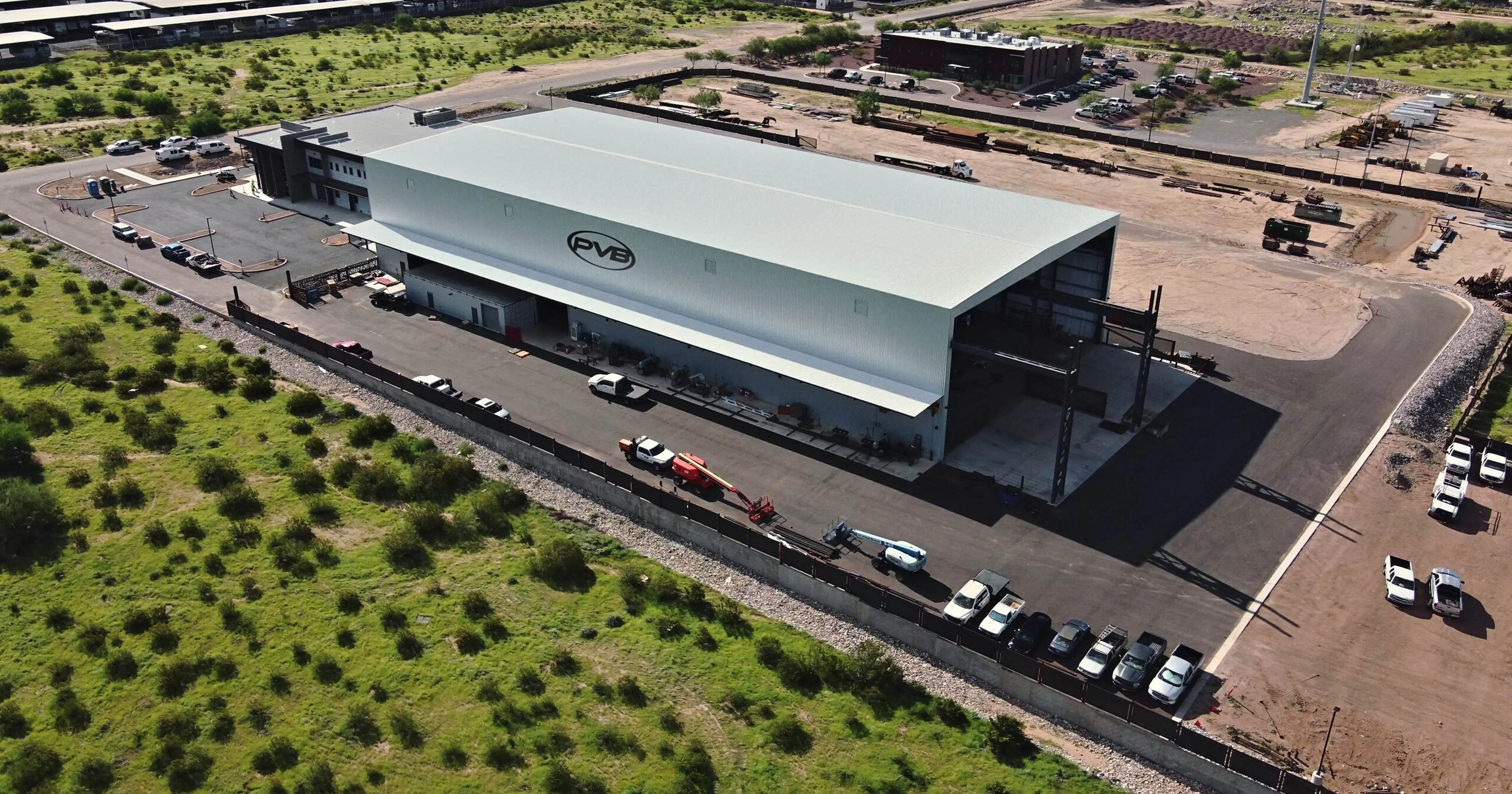
PVB Fabrications is an industrial steel fabrication and construction company that serves major mining clients, mostly copper mines, across Arizona, New Mexico, and Texas. Founded more than 20 years ago, the company is based in Marana, Arizona, where its corporate office and a large fabrication shop support crews at field sites across the region. PVB has grown from about 350 employees at the start of the year to roughly 500 today. Clayton Bried, Director of Technology and Business Systems, has worked across IT consulting and industry, helping companies implement software and best practices. Paul Oman, Controller, works closely with payroll and the general ledger and set up PVB’s timesheet mapping and weekly general ledger sync. Together, they led PVB’s move to Miter, which went live in January 2026 alongside their new ERP, Sage Intacct Construction.
Key takeaways:
- Before Miter, each PVB site tracked time in Excel, and the back office relied on custom macros to compile timesheets, calculate per diem under six different policies, and build upload files for ADP.
- With no integration between ADP and QuickBooks Desktop, accounting entered a large journal entry by hand every week to job cost labor, and the team couldn’t track labor hours at the activity level.
- PVB chose Miter because of its construction focus, certified payroll capabilities, and its strong integration with Sage Intacct Construction. They implemented both systems at the same time.
- Site clerks at each field location now enter time directly into Miter, while kiosks handle time at the fabrication shop and two other locations.
- PVB now runs weekly payroll in Miter, and back-office payroll time dropped from about 50 to 75 hours a week to about 12 to 16.
- Per diem now calculates automatically and allocates to jobs, which helped the team catch employees whose eligibility had been missed or applied incorrectly.
- Time, payroll, onboarding, and expenses now run in one platform, with digital onboarding the biggest win for HR and Miter Safety rolling out next.
The challenge: Excel, macros, and systems that didn’t connect
PVB’s workforce moves with its projects. Most of its roughly 500 employees work in the field at large mine sites, and as the company takes on new jobs, headcount can fluctuate.
Before Miter, every site filled out its own timesheets in Excel. A few years ago, Paul helped develop a uniform template and built a macro that compiled the sheets into a file PVB could upload into ADP, which handled payroll, onboarding, benefits, and the company’s 401(k). The macro cut timesheet processing from two people working three days to about a day and a half. Per diem required a second macro. Almost every field employee is eligible, and PVB has six per diem policies and rates.
“We didn’t have any way to track distance. So, we were just manually putting yes or no for an employee,” Paul says. Rosters also had to be updated constantly as people transferred between sites.
Once payroll ran each week, the team took the reports from ADP and manually entered a large journal entry into a wash account to job cost labor, since ADP and QuickBooks Desktop weren’t integrated.
Expenses were just as manual. Employees stacked up receipts, photocopied and scanned them, and tracked everything in Excel.
When Clayton joined PVB, he started getting asked for reports, metrics, and ways to improve processes. Each request went back to the data, and whether consistent data was coming in from the right location at the right time. Paul saw the same gaps on the financial side. “We weren’t ever tracking hours. We didn’t have timesheets in QuickBooks, so there was a lot of metrics that I was missing as well,” he says. Project controls also wanted a way to track labor at the activity level, watch burn rates and capacity within each cost code and cost type, and present that information to clients.

“We needed to establish a foundation for consistent processes and reliable metrics. The focus was on building a framework of scalable systems that would support our growth and provide better visibility into our operations.”
Clayton Bried
Director of Technology and Business Systems, PVB Fabrications
The solution: One construction-focused platform for time, payroll, and HR
PVB had already chosen Sage Intacct Construction as its new ERP. For time, payroll, and HR, Clayton first looked at another HR and payroll platform he knew well from earlier in his career. After demos of Miter and the other solution, certified payroll became a deciding factor. “Certified payroll was the thing that kind of put it over the top. We have to have that,” Clayton says. The team also talked to other companies that had implemented Sage, including a couple that used Miter, and found that Miter was construction-specific and better aligned with PVB’s roadmap for safety and field operations.
The other platform would also have needed a lot more configuration to fit PVB’s business.
“We don’t have a dedicated IT team, and we already wear multiple hats. We needed a system that worked for our business without the burden of constant maintenance and customization.”
Clayton Bried
Director of Technology and Business Systems, PVB Fabrications
Clayton built a priority list from PVB’s key requirements, and Miter came out on top, including the integration that would connect time and payroll to the new ERP. “Both of us have experience knowing that point solutions become a pretty big headache, especially when talking about integration. So having something that’s all in one is definitely big,” Paul says.
With the new ERP set to go live January 1, the team decided to implement Miter at the same time. Setup took a couple of months, and within about four months the team was trained and running Miter without Clayton and Paul involved in every process. Because HR and accounting each have about three people, PVB used a train-the-trainer approach, and Clayton now holds an internal session with department leads after each monthly Miter release.
“Megan, our implementation manager, killed it. Everyone loved Megan. I think the comment that we heard a lot from that piece is it’s so nice that someone knows the tool that’s trained and implemented.”
Clayton Bried
Director of Technology and Business Systems, PVB Fabrications
Back-office staff were excited from the start, while field teams needed more time to adjust. “We have employees who’ve spent more than 20 years in this industry using Excel timesheets. They’ve developed processes that work for them, so change takes time,” Clayton says. Digital expense reporting is one of the features field employees love now. “The feedback has been positive,” he says.
Outcome #1: One time system across the shop and the field
PVB has about six major field locations, each managed by a site superintendent and a clerk. “Our clerks are kind of like the one entry point into all things ops at that site, which includes payroll or timesheets,” Clayton says.
The sites are massive, and a single mine can cover several square miles and include around 10 jobs. Superintendents, foremen, and crews in each area track time on paper or Excel sheets, which reach the site clerk by email or as paper dropped on her desk. The clerk then enters that time directly into Miter from a browser, where it’s reviewed and approved before payroll.
“We used to receive all the Excel sheets into the back office and do all these macros. Now the superintendents, foremen, and project managers still track time a lot on these Excel sheets, but at least they’re going to the site clerks, and the site clerks are just entering directly out in the field into Miter. So, it was a huge win.”
Clayton Bried
Director of Technology and Business Systems, PVB Fabrications
At the fabrication shop and two other locations, PVB uses Miter’s kiosk mode. A recent Miter release also lets PVB set different time policies for each site, so every location can follow its own business practices while all time lands in the same system.
Now, when the team sets up a job, they build the work breakdown structure in Sage, and it automatically syncs into Miter. PVB uses a general catalog of codes, and many jobs also have custom codes and activities. Of the more than 600,000 hours PVB has tracked in Miter, 97% are coded to both a job and an activity.
Outcome #2: Weekly payroll and per diem for a large hourly workforce
PVB runs payroll every week for its roughly 500 employees. Clerks have until the end of Monday to submit time, and PVB’s project controls director approves it Tuesday morning. “It used to take us to the end of the week to run payroll, and now we’re running payroll and having it sync to the GL by Tuesday or Wednesday,” Clayton says.
The bigger change is in back-office hours. Before Miter, even with the macros, it usually took at least three people two to three days each week to work through time, per diem, and the journal entry. Paul estimates that added up to about 50 to 75 hours per week. Now it takes one person about a day, plus a couple of hours of Paul’s time reviewing and correcting the general ledger and timesheets. With some back and forth with site clerks, the team puts the weekly total at about 12 to 16 hours.
Miter worked with the team up front to set up PVB’s six per diem policies, and per diem now runs in the same system as time and payroll. “Not only does it all pull into the system, but on a click of a button, it’s pulling that, and that was a big win,” Clayton says. Paul adds, “It’s calculating now and allocating to the jobs proportionately.” The employee who used to pull all the Excel files together for per diem no longer works on payroll and is now fully on the procurement side.
Moving per diem into Miter also helped the team apply eligibility more consistently. Employees could be eligible on one job because they lived more than 50 miles away, then move to a job where they weren’t, and the old process wouldn’t always pick up the change.

“We did catch quite a few people who should have been getting per diem and vice versa. So that helped us get more consistent there.”
Paul Oman
Controller, PVB Fabrications
Outcome #3: Job-coded labor data the team can trust
Because every hour starts with a job and activity code, the labor data PVB sends to its general ledger is far more detailed than before. “Being able to just get so much info into a huge ledger entry has really been great for tracking on a detail level,” Paul says. Accounting also has a clearer view of each payroll before it goes out.
“Having all that information consolidated into one report gives accounting the visibility to analyze, validate, and approve payroll data much more efficiently.”
Clayton Bried
Director of Technology and Business Systems, PVB Fabrications
Clayton has more confidence in the numbers, too. “Having one stop where we see all the data, there’s absolutely more trust in the data,” he says. When something looks off, accounting can check time off approvals, confirm what type of time it was supposed to be, or spot hours coded to the wrong project by pulling the total for that project on that day. “The usability of the system allows them to troubleshoot a lot quicker,” Clayton says.
Project controls has also found it easier to keep its reports up to date. “Having this data come in on that cost code level with hours and everything and running those reports has been great for them,” Paul says.
Outcome #4: Supporting a workforce that changes with every project
With headcount that rises and falls with each project, onboarding and offboarding are a big part of PVB’s HR workload. Clayton sees digital onboarding as the biggest win for HR, and site superintendents have noticed the difference too.
“One of the biggest things is hearing from the site superintendent going, ‘Man, the digital onboarding has been huge for us,’ because you have employee packets for every employee. We onboard 60 people that might just be working for 30 days.”
Clayton Bried
Director of Technology and Business Systems, PVB Fabrications
PVB is also expanding its use of Miter for offboarding, which Clayton says has been helping as well.
Expenses also moved into Miter. Field employees no longer stack up, copy, and scan receipts, and PVB connected its two main company credit cards so the team can require and attach receipts, categorize charges, route them through an approval flow, and sync them to the general ledger. “The cards, that’s been a big one,” Paul says.
Safety is the next area PVB is bringing into Miter. The company’s safety team of about 15 people ran a field beta of Miter Safety on iPads and received great feedback. Clayton expects it to be a big implementation, starting in Q4 and continuing into next year. “Safety we’re really excited about,” he says.
The impact: Scalable systems for a fast-growing industrial contractor
Since moving to Miter, PVB has cut weekly back-office payroll time by about three-quarters, while bringing time, payroll, per diem, onboarding, and expenses into one system for a workforce that keeps growing.
The move also gave PVB a chance to formalize its policies. Under the old spreadsheet process, per diem eligibility was tracked with manual yes or no entries, and there were some gray areas in how policies were applied. Setting up Miter prompted the team to define each policy and then work with Miter to build it into the system, as it did with per diem. “Okay, what are our policies? What does it need to look like? And then, how do we implement it into Miter?” Clayton says.
With its policies and back-office processes in place, PVB is now returning to the goal it started with, supporting its field teams.
“Our original goal was to better support field operations, but we quickly realized we needed to strengthen our foundational systems first. Now that we've established that foundation, we're in a much better position to scale and deliver new capabilities to the field.”
Clayton Bried
Director of Technology and Business Systems, PVB Fabrications
In 2027, that means helping field teams manage time and projects more digitally. PVB plans to give project managers more visibility to group time submissions and expand its use of Miter Daily Reports, working with Miter on new ways to configure them. The team is also setting up its estimates at the cost level to use Miter Project Intelligence, so project managers can see budget hours as projects progress and adjust as needed.
PVB is also eager to test new Miter features as they come out. “I think we’re always number one to be like, ‘Hey, let’s try it,’” Clayton says.
Clayton’s advice for other industrial contractors with large hourly workforces is simple. “I’d recommend Miter all day long,” he says. He suggests clearly defining HR requirements and aligning internal policies before implementation, since a messy process will only cause frustration once it’s in a new system. Paul adds that contractors should understand their ERP, what information it needs, and any limitations before they start.
With Miter, PVB has a back office that can keep pace with its growth, and the same system ready to bring more of the field along.
Share this article
Frequently asked questions
Ready to supercharge your back office?
Get a demo Get a demo