Construction site inspection: Evaluating site conditions and safety
Blog
Safety

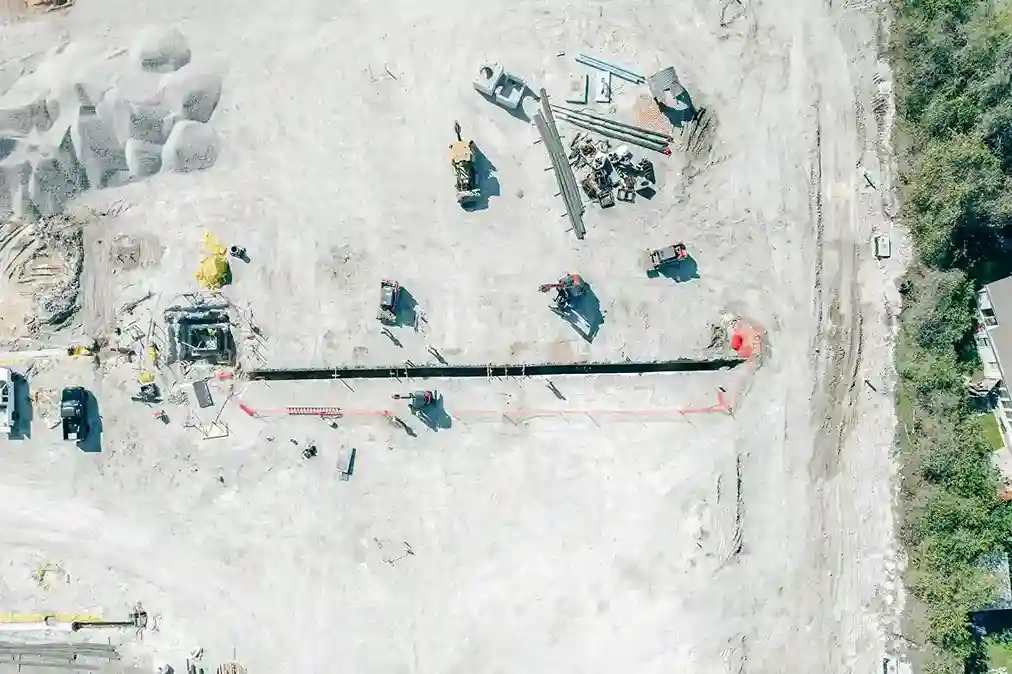
In construction, an authority having jurisdiction (AHJ) is the organization or official with the power to enforce the codes that govern a project. The AHJ reviews plans before issuing permits and inspects the work as construction progresses. The building official’s final sign-off determines when the owner may legally occupy the completed building.
Requirements, review timelines, and inspection procedures vary widely by jurisdiction, so contractors managing multiple projects must match every site to the correct authorities and prepare field operations for each inspection window.
This article explains AHJ meaning in construction, including the types of organizations that serve in this role and the standard permit process. It also covers how contractors can overcome common approval challenges to keep field work aligned with AHJ requirements.
An AHJ is a functional role, not just one single person or agency. Each AHJ enforces specific building codes or safety standards and may approve designated installations, materials, and procedures. An AHJ grants approval strictly within its designated task, meaning clearance from one official doesn’t satisfy all regulatory requirements for a project. Passing the building department’s framing inspection doesn’t clear sprinkler systems with the fire marshal.
Complex construction projects typically involve multiple AHJs split across government and private sectors.
Local building departments usually lead the permitting process. They review construction documents against adopted building codes and issue the main building permit. Their inspectors then check the work at required stages, like foundation and framing. After the project passes its required inspections, the building official can finalize the permit and issue a certificate of occupancy (CO) upon completion.
Fire marshals enforce adopted fire and life safety codes by reviewing fire protection plans like alarms and sprinklers prior to installation. The fire marshal’s office inspects these systems during construction, witnesses acceptance tests, and provides final sign-offs required for building occupancy. Some jurisdictions assign these duties to the local fire department. Others divide that responsibility between the fire marshal and building department.
Health departments regulate projects that could impact public health. Local agencies commonly review commercial kitchens, food service spaces, and public pools. State health departments may oversee medical facility construction, and local or state environmental health offices may review private water and wastewater systems.
Trade inspectors review specialized installations against standards like the National Electrical Code (NEC), Uniform Plumbing Code (UPC), or International Plumbing Code (IPC). They conduct rough-in inspections before crews conceal the work and return for final inspections after installation. Jurisdictions either house these inspectors within the building department or delegate them to separate agencies. For example, San Francisco handles both under a single department, but Seattle splits them between the construction department and public health.
Private organizations occasionally act as AHJs under specific conditions. Insurance inspection offices may enforce standards tied directly to policy coverage, while industry associations may evaluate specialized work against their own standards. These private approvals don’t replace mandatory government permits unless local law grants the organization that legal authority.
While an AHJ’s authority depends on the code and local law, the role usually covers the following key responsibilities.
Designated officials determine how local regulations apply when requirements leave room for interpretation. Their decisions govern the project unless successfully appealed by the applicant. They evaluate permit applications, attach specific project conditions, and possess the legal authority to revoke permits when necessary. For example, a building code specifies a clear and safe exit route, but the blueprints show an unconventional curved hallway layout. The official interprets the code to decide if the design meets safety requirements before issuing the permit.
Inspectors examine active construction at mandated milestones to verify compliance with the approved plans. When they identify code violations, they can require corrective action or issue formal stop-work orders until the crew corrects issues. In practice, an electrical inspector might notice wiring too close to a gas line during a rough-in inspection. The inspector can halt all electrical work until the crew moves the wiring to meet code.
Officials can approve alternative materials or methods if technical evidence demonstrates they meet the code’s intended performance and safety levels. Take the case of a contractor who wants to use a new fire-resistant wallboard that’s not listed in the local code book. They must submit certified lab testing data to the AHJ, and the official decides whether to approve it as an equivalent alternative.
The primary building official issues a CO only after confirming all inspections are passed, outstanding violations are resolved, and specialized sign-offs are secured. To illustrate, before a new retail store can open its doors to the public, the building official must verify that plumbing, electrical, and fire alarm inspections have passed.
Each AHJ sets its own submission and review procedures, but contractors generally move through the following seven stages.
Contractors first determine which authorities oversee the planned construction work. The building department may control the main permit, while the fire marshal reviews fire protection systems. Utility and environmental work may require separate approval.
The project team prepares an application for each AHJ. A building permit submission typically includes stamped structural drawings and engineering calculations. Depending on the project scope, the AHJ may also require energy compliance forms or separate trade applications. Contractors may need to attach licensing records and proof of insurance as well.
Plan reviewers compare the proposed work against locally adopted building codes. Review times can range from days to months depending on the AHJ’s workload and the project’s complexity. Some jurisdictions offer expedited reviews, but they may restrict eligibility or charge an additional fee.
The AHJ may return the plans with formal questions or required design changes. The design team must address each comment directly and highlight the corresponding revisions on updated drawings. Providing a thorough response keeps subsequent reviews focused. Complex projects may require multiple review cycles before the AHJ grants approval.
The approved permit may establish an inspection sequence or restrict working hours. Some AHJs also require a formal preconstruction meeting. Operations leaders must communicate these conditions before crews mobilize so field teams understand when work can proceed and when they must pause for approval.
Contractors map each required inspection to the master construction schedule before breaking ground. As crews approach each hold point, field supervisors schedule inspections and confirm that the work is ready for review.
The building official issues a CO only after the project passes its final inspections and satisfies all permit conditions. Code-related open punch list items, unresolved deferred submittals, or late inspection findings may all delay approval. Until the project team closes these items and secures each required sign-off, the owner generally can’t legally occupy or operate out of the building.
A few common permitting and inspection challenges can stall the entire project schedule:
Contractors usually manage permits and inspections using dedicated tracking software and direct communication with AHJ offices. No single platform can replace that core workflow. However, beyond tracking paperwork, field readiness determines whether inspections go smoothly.
With Miter Learning, operations leaders can track which credentials each worker holds, so schedulers can assign qualified workers before an inspection.
Miter Field Operations shows operations leaders which crews are assigned to each job and what is happening on the jobsite. Daily reports and approval workflows help operations leaders coordinate field readiness with AHJ inspection windows.
Miter HRIS stores signed forms, professional licenses, and job-specific paperwork in each employee’s profile. Permission-based access helps supervisors retrieve the required documentation during an inspection.