OSHA construction safety regulations: Contractor guide
Blog
Learning
Workforce compliance

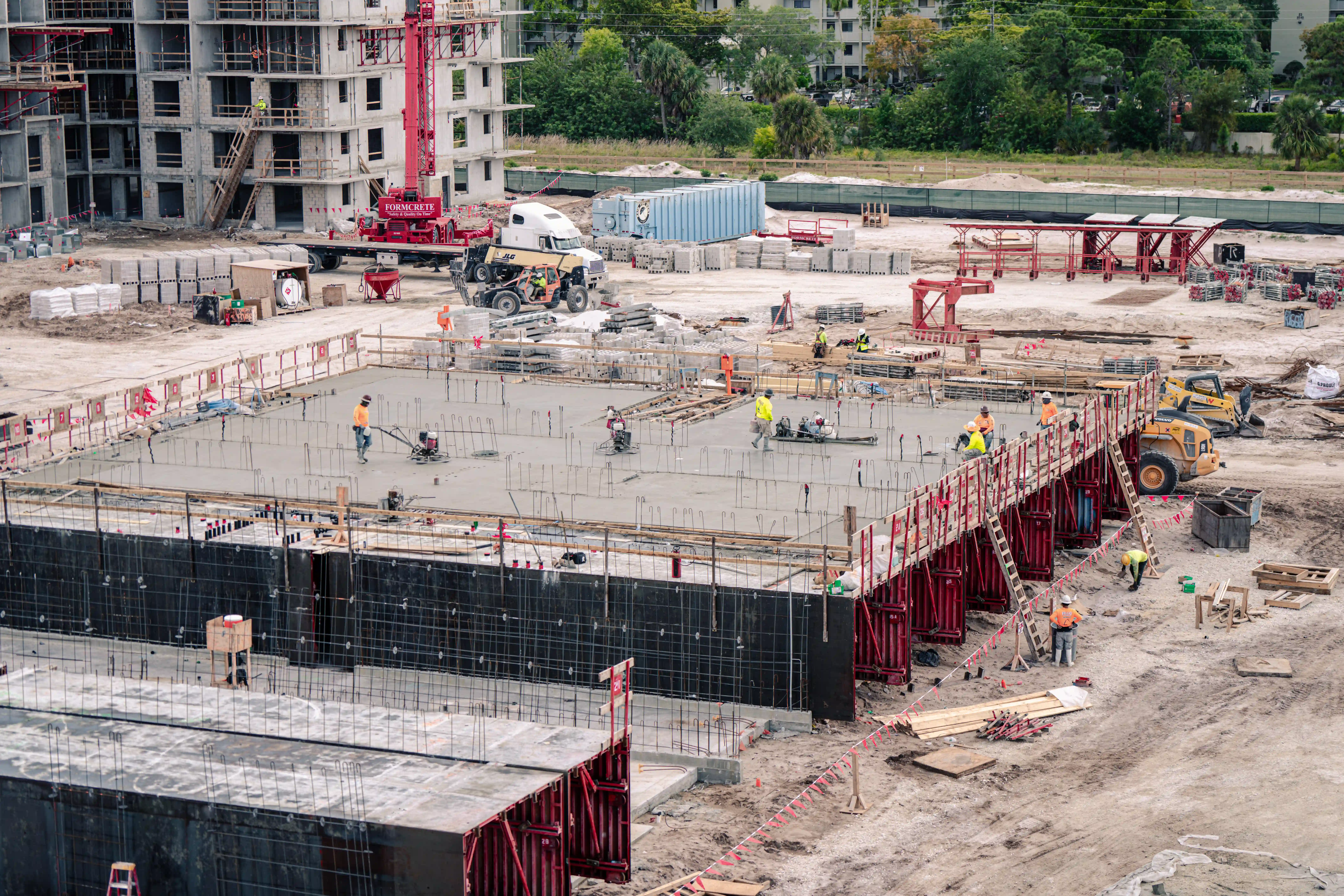
When construction companies fail to follow their legal obligation to keep crews safe, they do more than just risk a hefty fine. Failing to follow federal workplace regulations can drive up insurance premiums, halt work while contractors address jobsite hazards, and even put the well-being of workers in jeopardy.
The Occupational Safety and Health Administration (OSHA) is a federal agency that provides detailed guidelines for workplace safety. If contractors fail to meet OSHA’s requirements, it could lead to formal violation proceedings, including corrective action, fines, and other penalties that put projects behind.
To help contractors better understand their obligations, this guide lays out what qualifies as an OSHA violation, the most common failures, and the associated consequences.
In construction, OSHA regulates the major hazards workers might encounter on a jobsite, including (but not limited to):
An OSHA violation is a failure to meet these federal safety or health standards. On construction sites, OSHA issues the most citations for fall protection, hazard communication, and ladder violations.
Typically, OSHA finds out about violations through worker complaints, referrals from another party, or reported injuries and fatalities. There doesn’t have to be an incident or complaint for a violation to occur. Inspectors can visit at any time, and if they find conditions that don’t meet OSHA’s requirements, they’ll issue a formal notice called a citation. This citation identifies the standard that was violated, the proposed penalty, and the deadline for correction (abatement date).
“Violation” and “citation” are often used interchangeably, but “violation” refers to the issue, and “citation” refers to the document that describes the issue.
Because construction is such a dangerous industry, it also faces the most citations. According to the Center for Construction Research and Training, in 2024 alone, partial and complete OSHA inspections resulted in more than 52,000 citations.
Here are 10 of the most commonly cited OSHA violations in construction environments.
According to OSHA data, in 2025, there were 6,992 fall protection violations, making this by far the most common breach category. To prevent citations here, employers must offer fall protection to crews working on surfaces with unprotected edges of six feet or higher. This height might be lower for specific tasks, such as steel erection. Approved systems include guardrails, safety nets, and personal fall arrest equipment.
This is a broad category, so contractors should be thorough when assessing each work area for risks and create fall protection plans to support compliance.
OSHA considers fall protection training so important that it is addressed under its own standard distinct from general fall requirements. Under these standards, employers must provide consistent, documented training on fall hazards, correct procedures, and each employee’s role under the relevant fall protection plans. Employers must keep a written certification record for each trained employee, including the employee’s name, the training date, and the trainer’s signature.
Contractors must clearly label any hazardous chemicals and communicate any risks to employees. On construction sites, the most common failures against this standard are the lack of a written hazard communication (HazCom) program, inadequate access to Safety Data Sheets (SDS), and inadequate employee safety training.
Under OSHA guidelines, self-supporting portable ladders, non-self-supporting portable ladders, and fixed ladders are subject to slightly different sub-standards. Contractors need to make sure each type on their site meets the appropriate guidelines. Common violations include extension ladders that don’t extend at least three feet above the upper landing, unsecured side rails at the top, and damaged ladders that should have been tagged out of service.
OSHA has extensive requirements for safe scaffolding, that cover load capacity, platform construction and guardrails, and fall protection, which is required on scaffolds more than 10 feet above a lower level. A competent person needs to inspect a scaffolding system and all of its parts before every use or after any incident that might affect its structural integrity.
Most construction tasks require some sort of protective equipment, so sites need to provide a wide range of PPE. Common examples include:
Aside from a few exceptions, OSHA requires employers to pay for PPE. Contractors must check the adequacy of any personal equipment workers use to comply with OSHA standards.
OSHA requires that employers protect employees from harmful dusts, gases, or fumes at all times. Common respiratory hazards on construction sites include:
Contractors must provide respirators and masks and have a workplace-specific written respiratory protection program. It must include a medical evaluation before an employee is fit-tested or required to use a respirator, annual fit testing, and procedures for cleaning, maintaining, and storing respirators.
As well as respiratory equipment, OSHA requires employers to provide appropriate eye and face protection like goggles and face shields. This is especially important during tasks like cutting rebar, chipping concrete, and working beneath another crew. OSHA references the American National Standards Institute (ANSI) guidelines for PPE, which offers accreditation for PPE products. This is a good place to start when looking to ensure the quality of protective equipment.
1926.20 is the umbrella construction safety standard. It requires employers to maintain an accident prevention program and to assign competent persons to conduct frequent jobsite inspections. Employers must ensure that laborers don’t have to work in an environment that OSHA would consider unsanitary or hazardous. Common violations of this standard include not delivering safety training to workers, using noncompliant equipment, and failing to have a competent person inspect jobsites on a regular schedule.
These standards apply to most trucks on construction sites, including platform lift trucks, forklifts, tractors, and motorized hand trucks. Employers need to prove that these vehicles have adequate testing and designation. All trucks need to operate according to their class. For example, some vehicles can’t be in the same environment as flammable materials.
OSHA also mandates that employees operating trucks are trained properly. Workers need to go through formal instruction, practical demonstrations, and on-site evaluations. Once that’s complete, contractors certify the employee is properly trained. Every three years, contractors must reevaluate each worker’s ability to operate a truck properly.
Failing to comply with OSHA requirements can lead to high fines and even site closures. Here are some of the most notable consequences of violations:
If contractors do receive a citation from OSHA, they have 15 working days to decide whether to contest or negotiate it. This often requires a meeting with the OSHA area director. Those who choose to accept the citation must post it near the violation site for three working days or until the issue is corrected. Contractors then need to address the hazard by the abatement date and pay any related fines.
Types of OSHA violations fall into a few different categories depending on the severity of the breach and whether the company has a history of violations. Here are the main types and their consequences:
This is the most severe category and therefore has the biggest consequences: fines of up to $165,514. Willful violations refer to issues the employer clearly knew about and failed to mitigate, and repeated violations are those that occur more than once within five years.
If OSHA issues a citation and workplace leaders fail to resolve the violation by the abatement date, the agency can fine the company $16,550 per day.
“Serious” refers to any problems that could result in serious physical harm or death. OSHA categorizes them into different levels of fines depending on severity and probability, also known as gravity-based penalty (GPB) amounts. These amounts are:
These are lower priority because the potential dangers are less pressing or severe. Fines depend on the issue but typically range from a few hundred to a few thousand dollars. Common examples include failing to post OSHA citations at the worksite or failing to display required OSHA notices.
De minimis violations are those that don’t pose a danger to workers but are still technically against OSHA guidelines. These typically result in verbal warnings rather than formal citations.
Following OSHA guidelines requires vigilance and organization. This starts with the right documentation system.
Miter’s construction safety software gives contractors the documentation trail OSHA inspectors look for. Crews run safety meetings with electronic signatures, fill out safety checklists from the mobile app on the jobsite, log incidents and hazards with photos and witness statements, and roll all of it into daily reports tied to the right job and date. When a citation is issued, having every inspection, meeting, and corrective action in one place makes it faster to demonstrate good-faith abatement to the area director.
Contractors can also close training gaps with Miter Learning, which includes over 500 construction safety courses embedded directly in the LMS. The catalog covers OSHA 10 and OSHA 30 certifications along with topic-specific training on fall protection, hazard communication, scaffolding, and PPE, the same areas that drive the most-cited violations on this list.