OSHA construction safety regulations: Contractor guide
Blog
Learning
Workforce compliance

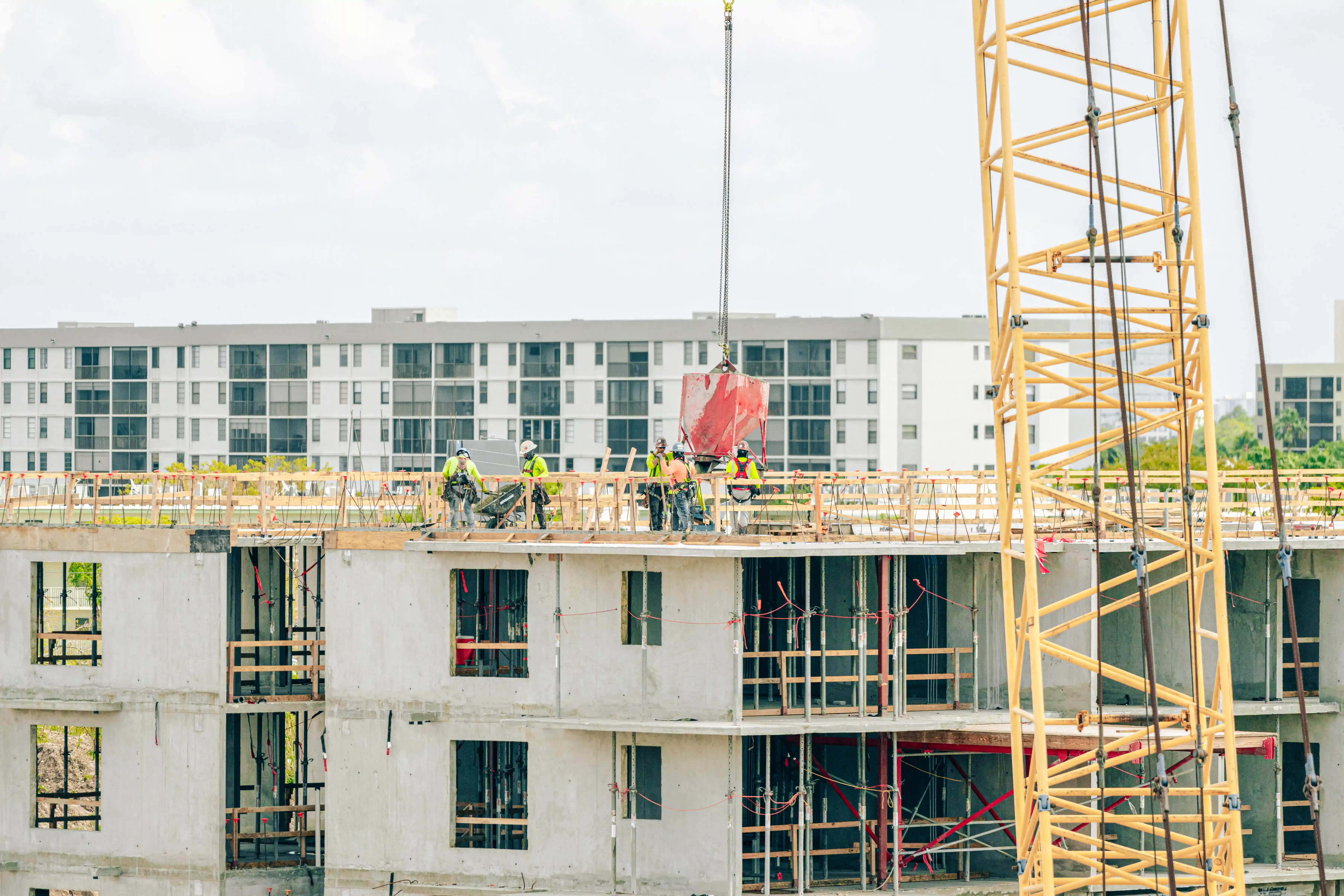
According to the Occupational Safety and Health Administration (OSHA), falls are the leading cause of fatalities in the construction industry. It’s the reason that the industry is so tightly regulated, with many fall protection requirements and standards for contractors to follow.
Contractors should try to prevent fall risks for every construction site, not just those that include higher-risk tasks like roofing or scaffolding. Leaders need comprehensive strategies that factor in hole coverings, safety nets, and personal fall arrest systems (PFAS) to avoid injuries and even save lives.
In this guide, learn when fall protection is required in the construction industry and the strategies that OSHA recommends implementing.
Fall protection refers to the standards, systems, and equipment that prevent slips and falls. On construction sites, OSHA requires these protections when people work on or near elevated surfaces or holes.
Effective fall protection processes include a combination of personal protective equipment (PPE), engineering controls, and procedural safeguards. This puts as many buffers in place as possible to reduce risk and avoid injuries.
OSHA’s fall protection standards appear in 29 CFR 1926 Subpart M. Contractors can find further information on specific scenarios and responsibilities in the following subsections:
These standards give construction employers the information they need to build an effective fall protection program.
Under “Duty to have fall protection,” OSHA requires that construction companies provide fall protection when a working surface is six feet or more above a lower level.
This is commonly called the six-foot rule. It applies across all construction tasks and surfaces, regardless of task duration or frequency. For example, even if a worker only has to walk near a short eight-foot-tall edge once a week, they need the same protection as someone who does so every day.
There are exceptions to this rule, however. OSHA regulation 1926 Subpart R states that for steel erection, fall protection triggers at 15 feet, and Subpart L puts this at 10 feet for scaffolding.
Here are some of the most common construction scenarios where Subpart M applies.
Workers need a guardrail, safety net, or personal fall arrest system when operating near leading edges and unprotected sides of six feet or higher.
However, different rules apply to wall openings. In these instances, contractors only need to provide fall protection if:
The only other exception is when it isn’t physically feasible to install guardrails or other protective systems. In that case, employers need to create another compliant plan.
When workers must perform jobs on low-slope roofs (a 4:12 pitch or less), OSHA requirements depend on the crew’s distance from the edge. Within six feet, there must be conventional fall protection, like guardrails or safety nets. Within 6–15 feet, workers can use warning lines plus a safety monitoring system. Beyond 15 feet from the edge, only a safety monitoring system is necessary.
For steep-slope roofing (any pitch greater than 4:12), contractors must provide guardrails, safety nets, or PFAS. OSHA doesn’t allow warning lines and safety monitoring systems as alternatives.
When workers must carry out their duties near floor holes (including skylights) that are over six feet above the next surface, contractors must provide fall protection such as PFAS or guardrails around the holes.
Employees working beneath openings must use hole covers to protect themselves from falling objects. Contractors must label these covers and demonstrate that they can support at least twice the expected load.
In most cases, excavations and trenches also fall under the six-foot rule. However, when there’s egress access (ladders, stairways, or ramps within 25 feet of workers), contractors must provide fall protection at four feet instead.
Scaffolding at or above 10 feet tall falls under OSHA Subpart L (Scaffolds) instead of Subpart M. This is a common compliance error. The type of safeguards the agency requires contractors to provide depends on the type of scaffolding in use, but it typically includes guardrails or PFAS.
The fall protection options that OSHA deems compliant depend on the surface and hazard in question.
Guardrails should be at 42 inches above the working level. If there’s no wall or parapet wall around the edge, employers must install at least one of the following:
Keep in mind that toeboards don’t count as guardrails or add to height requirements.
PFAS include harnesses, lanyards, and anchors. These systems work together to keep workers from falling over an edge or into a hole. They must have a 1,800-pound maximum arresting force limit and a minimum breaking strength of 5,000 pounds per attached employee.
For floor and roof holes, covers must support at least twice the maximum intended load. For example, if the cover is only big enough to hold one person, it must support at least double the average person’s weight. Contractors must also color-code or mark them all with “Cover” or “Hole.”
OSHA considers hole covers a primary fall protection, meaning the agency doesn’t require other protection if a cover is present. So covers must be high quality and in good condition. Temporary solutions, like a piece of wood over the hole, won’t pass an inspection and can result in OSHA violations.
For higher falls, it may not be practical to install guardrails or PFAS, so safety net systems can be more practical. The distance the net must extend out from the working area depends on the vertical drop distance:
| Vertical distance from the working level to the net | Minimum horizontal distance of the net from the working surface |
| Up to five feet | Eight feet |
| 5–10 feet | 10 feet |
| 10–30 feet | 13 feet |
| Over 30 feet | A safety net isn’t a suitable fall protection safeguard. Instead, contractors should use guardrails, travel restraint systems, or PFAS. |
OSHA doesn’t allow positioning systems as a standalone safeguard, but they can still be part of a comprehensive fall protection strategy. There are a few different types, including:
OSHA provides general fall protection requirements for non-construction workplaces (under 29 CFR 1910). In these cases, OSHA also requires fall protection at four feet rather than six. However, the agency deems these rules unsuitable for the construction industry.
Contractors must assess the entire jobsite to ensure they comply with the right fall protection standards. For example, if a crew carries out repairs to a previously completed warehouse, OSHA considers this a general industry workplace, meaning firms would need to adhere to general fall protection regulations.
Understanding OSHA’s fall protection requirements is a great start, but contractors must ensure they execute them to keep their workforce safe and stay compliant. Pre-shift briefings, employee training, and compliance documentation is difficult to handle, but Miter can help.
Miter’s mobile-first learning management system (LMS) makes it easy to inform and train employees. The platform provides learning content tailored to their needs and real-time progress reports. For example, Miter’s “Fall Protection for Construction” course from ClickSafety covers everything from fall hazard identification to site planning and is available in English and Spanish. With Miter, all the information crews need is accessible from the devices they already use.
OSHA regulation 29 CFR 1926 Subpart M outlines fall protection in construction contexts. It includes covered work surfaces and activities, protective system types, and employee training obligations.
Conventional fall protection refers to guardrails, safety nets, and PFAS. OSHA typically recommends these systems for fall risks. The agency only permits alternatives when conventional protections aren’t feasible, like in specific low-slope roofing scenarios.
A fall protection plan is a document that outlines how an employer plans to safeguard employees against falls. It should be written by a qualified person and explain site-specific hazards, worker responsibilities, and any alternative protective measures if relevant. Contractors must also ensure they update fall protection plans as site conditions change. Many contractors fold these plans into their broader construction planning process so safety is addressed before crews mobilize.” Anchor “construction planning.
OSHA’s Multi-Employer Citation Policy states that multiple employers can be responsible for fall protection on any given site. It breaks firms down into four categories: creating, exposing, correcting, and controlling. General contractors are typically the “controlling” employers and, as such, are responsible for hazards even if their employees aren’t exposed to any risk.
Under OSHA 29 CFR 1926.503, employers must appoint a qualified individual to train workers about relevant fall hazards and protections. This should happen before work begins, or later if changes to site conditions make it necessary.