9 most common construction site hazards
Blog
Safety

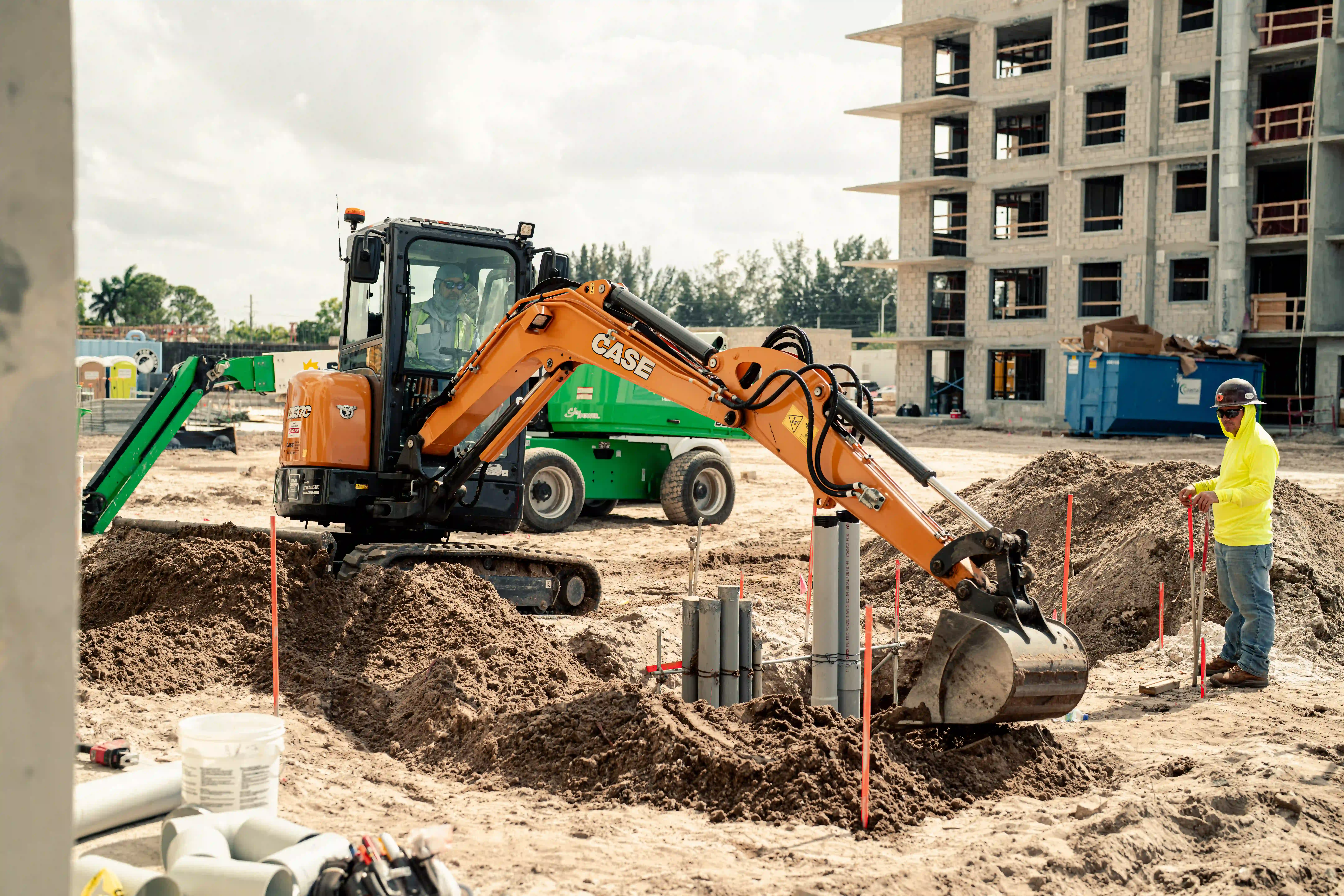
Excavation is one of the highest-risk activities in construction, and hazards can escalate rapidly, sometimes with very little warning. Sudden cave-ins, hazardous gas leaks, and underground utility strikes all put workers at risk of injury or death. Without strict compliance with construction safety regulations and proper planning, firms put workers and projects in harm’s way.
To prevent these issues, contractors need a practical understanding of excavation safety. Read on to learn about the most common hazards, OSHA requirements, and pre-task planning and execution.
OSHA defines excavation as “any man-made cut, cavity, trench, or depression in the Earth’s surface formed by earth removal.” Excavation safety refers to rules construction crews must follow during these earth-moving tasks.
OSHA trenching and excavation safety requirements are so important because digging is a high-risk activity. The sheer weight of the earth can result in sudden shifting force, causing trenches to collapse seemingly without warning. Just one cubic yard of soil can weigh as much as a car, so it’s not difficult to see why trenching kills roughly 40 workers each year, the majority of them in construction.
The first step in preventing injuries is to know what the common excavation hazards are. Here are some of the primary dangers posed by excavation.
Cave-ins are the leading cause of excavation-related deaths. When soil shifts, pressure can build quickly and without warning, causing collapse and leaving workers with practically no time to react. Various conditions can increase cave-in risk, including loose or wet soil, vibrations from equipment or nearby traffic, and heavy loads near trench edges.
Even one of the following visible warning signs is grounds for immediate evacuation:
Open excavations are a fall hazard, which is why protections like guardrails and barricades are vital. But it’s not just people that can slip into trenches. Heavy materials or tools that fall into openings can strike workers below, causing serious injury or death.
OSHA regulations require crews to keep soil piles at least two full feet away from the edge of a trench. This provides protection both from falling materials and additional weight that can destabilize trench walls.
Soil is much heavier and less stable when it’s wet, which increases the likelihood of collapse and introduces drowning risk.
OSHA requires workers to leave excavations where water is accumulating, whether from a burst pipe or a rainstorm. Companies must monitor dewatering systems to ensure a dry, secure foundation.
Once excavations are deep enough, workers face dangerous atmospheric conditions like oxygen deficiency and toxic gas buildup. OSHA requires atmospheric before entry into excavations deeper than four feet whenever a hazardous atmosphere could reasonably be expected, such as near landfills, sewer lines, or stored chemicals. If testing reveals hazards, companies may need to follow confined space requirements. Contractors need to either post clear signs warning employees not to enter or have a written program explaining how workers interact with the space.
Accidentally striking underground utilities such as gas, water, or electric lines can lead to electrocutions or explosions. Even if no one is injured, emergency repairs or unexpected change orders can still disrupt project timelines and budgets.
Before breaking ground, contractors must call 811 and follow marking guidelines carefully. If companies need to work in buffer zones near marked utilities, they must excavate slowly, often by hand. If crews strike a utility while digging, they need to immediately stop working and evacuate the area before notifying authorities.
Operating heavy equipment too close to excavation openings can destabilize the soil and increase the risk of cave-ins. This is due to both the physical weight of the machinery as well as vibrations from operation. Nearby traffic and railways can also contribute to vibration-related hazards.
Contractors must adhere to OSHA’s safeguarding requirements such as barricades, spotters, and controlled equipment operation, especially near edges.
Here are the key excavation safety regulations under OSHA.
Every excavation site must have a competent person on site who’s authorized to conduct daily inspections, identify risks, and evacuate workers when necessary. OSHA defines a competent person as someone who’s able to spot current or potential hazards and fix them.
During inspections, the competent person must check soil conditions, protective systems, and potential hazards. Inspections are required:
OSHA has three soil classifications:
These classifications guide appropriate slope angles, which we’ll cover below. Stable rock is treated separately as an exempt condition.
Excavation sites must have safe entrance and exit paths.
OSHA requires the following:
Failure to follow these rules is among the most frequent citations for contractors.
Unless an excavation is entirely composed of stable rock, all excavations five feet or deeper must have protective systems in place. For excavations more than 20 feet deep, safety systems must be designed by a registered professional engineer (RPE).
Here’s an overview of critical excavation protective systems that can prevent cave-ins.
Sloping involves digging out trench walls at an angle so soil doesn’t collapse into excavation sites. OSHA requires specific slope ratios based on soil and rock type. For excavations less than 20 feet deep, the rules are as follows:
Benching refers to digging out the sides of an excavation in a stair shape to prevent cave-ins. There are two main types of benching:
Benching is allowed in Type A and Type B soils but never in Type C. In Type A, the first bench cannot exceed four feet.
Shoring systems support the walls of the trench. They may be:
Before picking a shoring type, the competent person should review the soil type, excavation depth, and equipment availability.
Trench shields are metal walls placed inside the dig site to protect workers in case a wall collapses, but they don’t prevent cave-ins entirely. They just give crews time to escape the danger. Before making any adjustments to the shield, workers need to exit the site.
There are several factors that determine the type and strength of an excavation protective system, including:
Always design protective systems around OSHA standards, which may influence appropriate measures such as shoring type or RPE needs.
Here are some critical safety measures contractors should include in an excavation safety checklist.
All crew members should be fully informed about the site-specific safety plan. This single document must outline:
OSHA can and will audit this document, so keep it up to date and in an easily accessible location.
Personal protective equipment must be worn at all times and may include:
Operational control protections for equipment and traffic include:
Follow load distribution requirements when equipment must be staged near edges.
Soil conditions need to be routinely evaluated and reevaluated to account for evolving conditions, particularly after:
If soil classification drops after an evaluation, operations leaders need to adjust protective systems immediately. OSHA formally recognizes four manual soil evaluation tests:
Any excavation safety meeting should cover the following:
Excavation safety is a nonnegotiable responsibility for operations leaders and individual crew members. Without it, people will get hurt on-site.
But protection goes beyond following preset rules. It also relies on a deep commitment to a culture of safety in the field.
Miter Construction Safety Software gives leaders the operational support they need to embed safety into every aspect of the job. Miter offers a mobile-friendly construction learning management system featuring OSHA-compliant training tools. Crews will have access to lessons on trenching and excavation safety, comprehensive safety checklists and inspection forms with AI-powered integrations, and structured instruction tools and reusable lesson templates.