9 construction safety certifications workplaces need

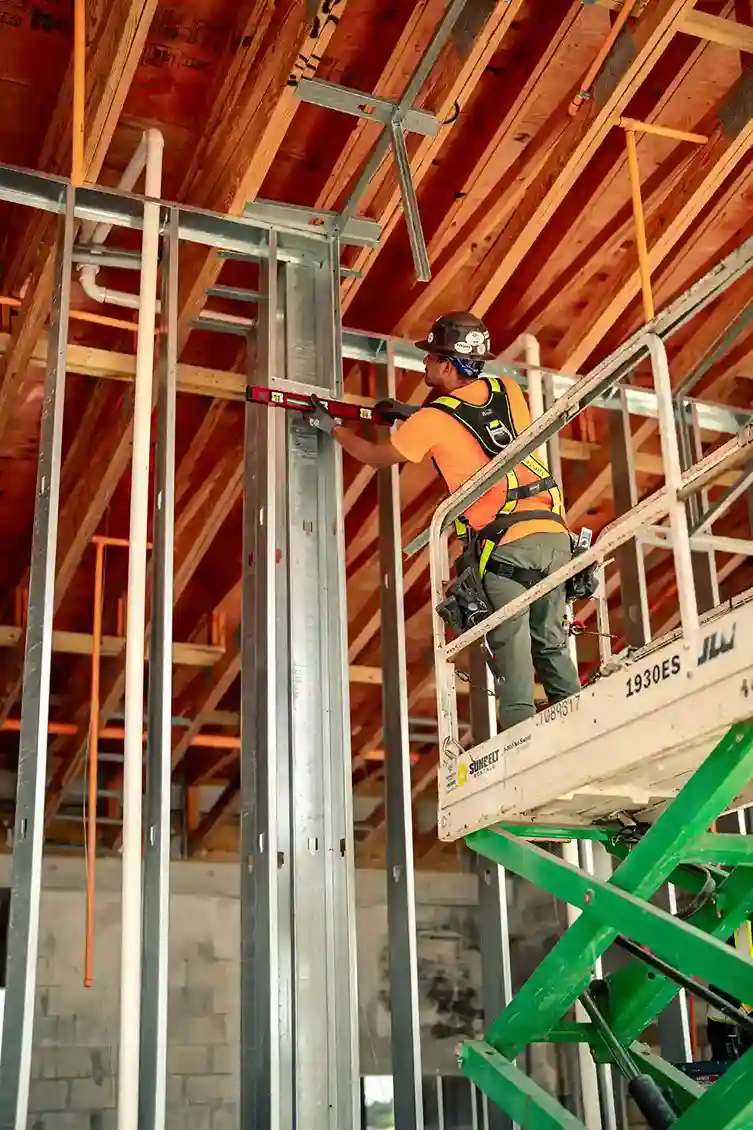
Construction safety certifications confirm that employees have completed safety training or demonstrated the knowledge required for a specific role. They include OSHA course-completion cards for jobsite workers and professional credentials for employees who manage construction safety programs.
The right credentials help contractors assign qualified employees to safety-sensitive work and meet project requirements. They may also determine whether an employee can enter a jobsite or a contractor can bid on certain projects.
This guide covers the main types of safety certifications, nine credentials construction teams may need, and practical ways to track them across jobsites.
What is a construction safety training certification?
A construction safety certification verifies that an employee has the safety knowledge required for a particular role. Some credentials only document completed training, while others might require relevant work experience and an exam.
For example, OSHA 10 and OSHA 30 are common course-based credentials in construction. OSHA authorizes instructors to deliver the training, and participants receive Department of Labor (DOL) course-completion cards. Federal OSHA considers these courses voluntary, although a local rule or project requirement may make them mandatory. And some crews may need separate training for specific hazards or equipment.
Besides OSHA, the Board of Certified Safety Professionals (BCSP) issues credentials for employees with greater safety responsibilities. Certifications such as CHST and CSP confirm that the holder meets defined experience and knowledge requirements.
Why safety certifications matter for construction businesses
Safety credentials help contractors confirm that employees have the knowledge required for their assigned responsibilities and support several business priorities beyond day-to-day hazard awareness.
Here are a few reasons safety certifications matter for construction:
- Earlier hazard recognition: Trained employees can identify common risks such as unprotected edges and unstable trenches. Supervisors with advanced credentials can effectively inspect work areas and correct unsafe conditions before work continues.
- Access to certain projects: Some local laws and construction contracts require OSHA training cards or named safety credentials. Missing documentation can delay jobsite access or disrupt mobilization. It may also remove a contractor from consideration during prequalification. For example under Local Law 196 in New York City, workers on any site with a Construction Superintendent or Site Safety Manager need a 40-hour Site Safety Training card, supervisors need 62 hours, and an OSHA 30 taken in the last five years covers all but 10 of those hours. Without the card, the worker does not badge in, and missing credentials can also drop a contractor during prequalification.
- Clearer compliance records: Course cards and certification records show who completed training and when. These records help contractors respond to audits or inspections. Employees may need additional training for their tasks and jobsite hazards. For instance, workers exposed to fall hazards likely need fall-protection training.
- Lower legal and financial exposure: Inadequate training can contribute to OSHA citations or stop-work orders. It may also increase a contractor’s liability after an incident. Current credentials help document the steps taken to prepare employees for their roles.
- Stronger safety leadership: Certified supervisors understand how to communicate expectations, document concerns, and follow up on corrective actions. Consistent oversight gives crews more confidence that reported hazards will receive attention.
Types of construction safety certifications
Construction safety credentials usually fall into two categories, general and specialized. The right category depends on the work an employee performs and the level of safety responsibility attached to their role:
- General construction safety training: These courses give workers and supervisors a foundation in common jobsite hazards. OSHA 10 usually supports entry-level roles, while OSHA 30 covers more material and suits employees with some safety responsibility. A project owner or local rule may require one of these cards before granting jobsite access.
- Specialized and professional credentials: These credentials validate expertise tied to a particular role. Crane operators, for example, may need certification that meets federal requirements. Safety practitioners can pursue credentials such as CHST or CSP to demonstrate their expertise and pass a formal exam.
Top 9 essential safety certifications construction teams need
Contractors will likely select credentials according to each employee’s role and project requirements. The following construction certifications list covers nine credentials, from entry-level course cards to options for experienced safety practitioners.
1. OSHA 10-hour construction training
The OSHA 10-hour construction training introduces entry-level workers to common jobsite hazards and employee rights. The course emphasizes OSHA’s Fatal Four hazards: falls, struck by, caught in between, and electrocution. Participants receive a DOL course-completion card.
2. OSHA 30-hour construction training
The OSHA 30 program provides broader training for forepersons and other employees with safety responsibilities. It covers hazard recognition in more depth and gives supervisors more context for applying OSHA standards. Employees may enroll directly because OSHA 10 isn’t a prerequisite.
3. Construction Health and Safety Technician (CHST) certification
CHST is a professional certification issued by the BCSP. It validates the technical knowledge of safety practitioners who inspect construction jobsites and recommend hazard controls. Candidates need three years of construction safety experience, at least 35% of their duties must involve technical safety knowledge, and they must pass the CHST exam.
4. Associate Safety Professional (ASP)
ASP supports safety practitioners working toward advanced responsibilities. Candidates need a bachelor’s degree in any field or an eligible associate degree, one year of professional safety experience, and a passed exam. The ASP is usually one of the pathways toward the CSP.
5. Certified Safety Professional (CSP)
CSP applies to experienced practitioners who lead safety programs. Candidates need a bachelor’s degree and four years of professional safety experience. They must also hold a BCSP-qualified credential before taking the exam. CSPs often oversee risk controls and company-wide safety performance.
6. Safety Management Professional (SMP)
SMP is the current name for the former Safety Management Specialist credential. It suits experienced managers responsible for safety programs or personnel. Candidates need 10 years of relevant experience, with at least 35% of their duties involving safety management. This certification also requires an exam.
7. Occupational Hygiene and Safety Technician (OHST)
Formerly known as the Occupational Health and Safety Technologist, this credential covers technical work such as exposure sampling and risk assessment. Candidates need three years of relevant experience and must pass the OHST final exam.
8. Certified Instructional Trainer (CIT)
CIT validates an employee’s ability to develop and deliver safety training. Candidates need at least 135 hours of experience in safety instruction or course development and a passed exam. The CIT doesn’t authorize a trainer to issue OSHA cards because OSHA applies separate trainer requirements.
9. Safety Trained Supervisor Construction (STSC)
STSC supports forepersons and crew leads who handle site safety alongside their primary duties. Candidates need at least 30 hours of safety training. Common experience pathways include two years in construction supervision or four years in construction work. Candidates must also pass the STSC exam.
Best practices for managing construction safety programs
Before assigning work, contractors need to confirm that each employee holds the credentials required for the task and understands the hazards on that jobsite. The following practices make that process consistent across projects:
- Site-specific safety planning: Each safety plan reflects the project phase and its current hazards. For example, high-rise work requires detailed fall protection procedures, while excavation work requires trench safety controls.
- Clear program ownership: Contractors appoint someone to verify credentials before mobilization. Safety leads also need the authority to pause work when required qualifications are missing.
- Advance training schedules: A central schedule captures renewal dates and refresher requirements, giving employees enough time to complete training before a credential lapses.
- Accessible workplace hazards reporting: Crews need a direct way to report unsafe conditions or near misses. Safety leaders also document how each report was resolved.
- Ongoing performance review: Reviewing inspection findings alongside incident trends helps contractors spot recurring problems. They can then compare job safety analysis (JSA) patterns with training gaps and adjust the program.
Simplify safety certification tracking with Miter
Paper cards and separate spreadsheets become difficult to manage as construction crews move between jobsites. A missing record can delay mobilization, and an expired credential can leave field leaders without the information they need to assign work safely.
Miter’s construction safety software manages safety training and certifications through Miter Learning. Miter Learning tracks credentials your crews earned elsewhere alongside the courses they complete in Miter, so you get a running view of which cards are current, which are expiring, and which are missing, with reminders before one lapses.
By bringing these records together, Miter Safety helps office teams and field leaders work from the same training information.
Frequently asked questions
How much does a construction safety certification cost?
OSHA 10 courses typically cost $50–$250, and OSHA 30 courses usually cost $150–$500. Online courses tend to fall near the lower end of those ranges.
BCSP currently charges $185 for the STSC exam. The CHST and OHST exams cost $300 each, as does the CIT exam. The ASP, CSP, and SMP exams cost $350 each. Application fees and annual renewal fees may increase the total.
How long does it take to complete OSHA training?
OSHA 10 requires at least 10 hours of instruction, and OSHA 30 requires at least 30 hours. Providers may spread the instruction across several days before issuing a course-completion card.
Do construction safety certifications expire?
OSHA 10 and OSHA 30 cards don’t expire under the federal Outreach Training Program, although a local law or employer may require recent training. BCSP credentials require an annual renewal fee and recertification every five years.
What certifications should I get for the construction industry?
The right certification depends on the role and project requirements. OSHA 10 commonly suits entry-level construction workers, and OSHA 30 may fit employees with supervisory responsibilities. Construction safety managers may qualify for CHST certification, while those moving into broader program leadership may later pursue ASP or CSP.