A guide to near-miss reporting in construction
Blog
Safety

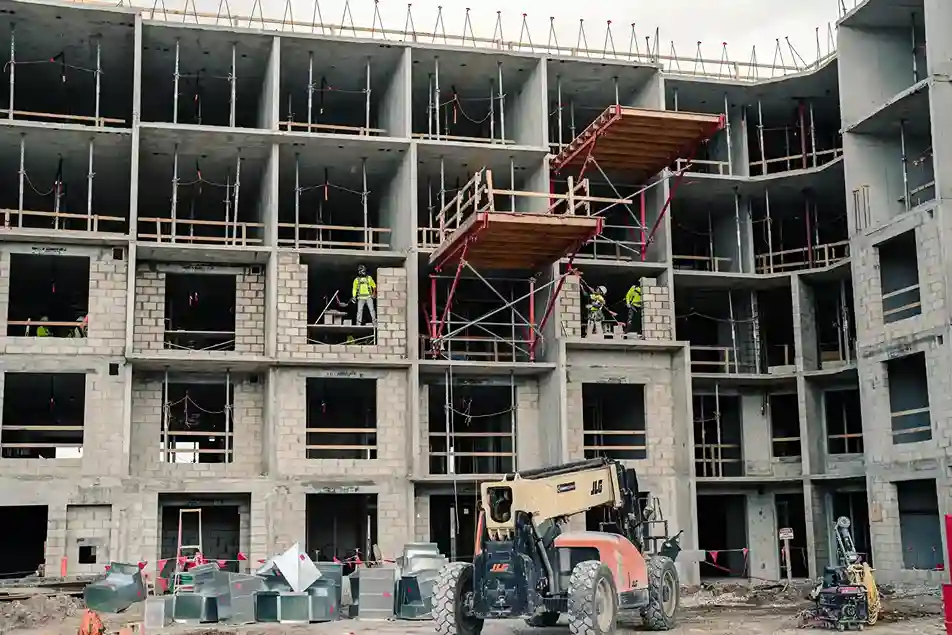
Conducting well-run near miss toolbox talks reduces workplace injuries and builds a robust safety culture. By prioritizing early identification and reporting of near misses, crews can get ahead of hazards instead of falling victim to them.
This guide shows operations leaders what counts as a near miss (with real-world construction examples), what a near miss toolbox talk should cover, and how to overcome worker reluctance to reporting.
A near miss toolbox talk is a short, focused safety meeting designed to identify and report near misses. It may take place shortly after a near miss or regularly as part of a general safety training program.
A near miss, in this context, is an unplanned event that could have resulted in injury, illness, or property damage but didn’t. Sometimes an event becomes a near miss by luck, and other times someone prevents it.
In practice, construction professionals sometimes use different terms with the same or similar meaning to describe a near miss, such as:
Each near miss toolbox talk example should cover the same ground by focusing on these core components:
Building near miss reporting into the overarching safety culture comes with tangible benefits that foster a safer work environment.
A near miss report is an early warning. It names the hazard while it is still cheap to fix, before the same conditions put someone in the back of an ambulance.
While OSHA compliance doesn’t require employers to record near misses on OSHA 300 Injury & Illness Recordkeeping Forms, the practice still comes highly recommended. This is seconded by the National Safety Council, which points to the benefits of proactively supporting ongoing worker safety improvements.
While it may not be legally required by OSHA for construction employers, near miss reporting is an increasingly common inclusion in contracts between owners and general contractors because it typically means fewer recordable incidents to manage.
A successful near miss toolbox talk program can reduce downtime: Fewer incidents means less time waiting for coworkers to recover or get replaced. Plus, when workers feel safer on the jobsite and have less disruption to deal with, they may feel more comfortable and confident in their daily work.
Workers may struggle to report near misses. Here are some of the main reasons why, plus what supervisors can do to encourage employees to speak up.
Near misses can go unreported because workers worry about getting in trouble. Say plainly that nobody gets written up for reporting a close call, then prove it the first time someone does. When reporting a near miss is non-punitive and workers know it, they may be more likely to participate.
Because no harm came from it, workers may feel that near misses are something to shrug off. Reframing near misses as lessons to learn from instead of non-incidents can help workers see the value in reporting and discussing them.
A long and complicated near miss reporting process can be daunting, potentially leading to underreporting when workers don’t feel up to wading through the paperwork. Keep the core reporting workflow as simple as possible, such as a text message to a supervisor or a quick interaction with dedicated safety tech.
Without a visible system for acting on feedback, workers may not bother reporting even if the procedure is straightforward. Conversely, when crews see positive changes come from their reports, they may be more likely to continue reporting in future.
It’s not always easy to identify a near miss. These real-world construction examples can help encourage understanding in what may count:
A near miss is a warning. The same conditions are still on the jobsite tomorrow. Operations leaders can turn these signals into real safety and productivity gains by acting fast and tracking close calls over time. But that’s often easier said than done.
Miter Safety gives teams the tools to manage both sides of the equation: running consistent, well-documented toolbox talks alongside thorough near miss tracking. Capture hazards through observations and incident reports tied directly to OSHA recordkeeping, then create custom toolbox talks to streamline meeting day. Know who showed up and who might need makeup training by tracking attendance with digital signatures.
A near miss is an unplanned event that had the potential to cause harm but ultimately didn’t, whether by chance or through worker intervention. An incident is an unplanned event that actually caused harm, whether that’s injury, illness, fatality, or property damage.
According to the Heinrich/Bird accident triangle model, about 300–600 near misses happen for every major injury.
Whether an investigation is legally required after a near miss depends on the jurisdiction. While not legally mandated in the U.S., organizations like OSHA and the National Safety Council recommend near miss reporting and investigation to prevent future accidents. These practices may also show up as contractual obligations.