OSHA fatal four: Construction hazards that cause the most deaths
Blog
Safety

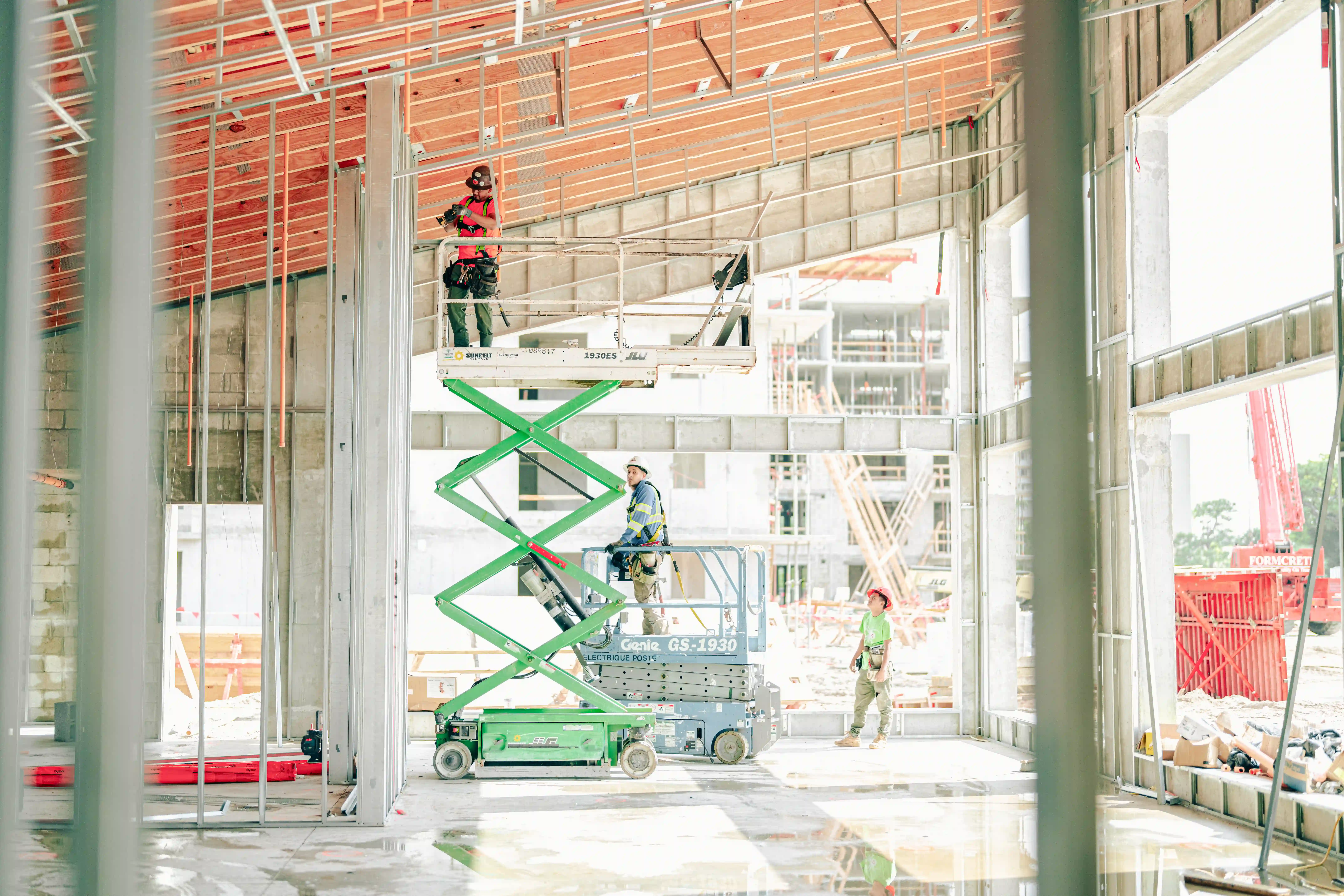
Statistics show that one missing guardrail or unprotected opening can turn routine work into a fatal incident. The Bureau of Labor Statistics reports that falls to a lower level alone killed 373 construction workers in 2024, accounting for more than one-third of the 1,034 deaths in private-sector construction.
Prevention is the key to construction site hazard control. But it’s difficult to maintain oversight when a jobsite changes from day to day, or sometimes by the hour, and the hazards change with it.
This guide explains what the common construction site hazards are and how contractors can identify and control them before an incident happens.
A construction hazard is any site condition that can cause potential injury, illness, or property damage. It may come from the work itself, such as an unprotected edge, or from jobsite exposure, such as silica dust. Some hazards cause immediate injuries, while others lead to illnesses that develop over time.
A hazard exists before anyone gets hurt. A damaged electrical cord is the hazard, while the likelihood of contact and the potential severity of the shock determine the risk. Understanding that distinction helps contractors prioritize the conditions that create the greatest exposure for crews.
A jobsite rarely presents one hazard at a time. A crew may work beside moving equipment while another trade works overhead, making coordination as important as each individual hazard control.
Here’s how construction sites combine several sources of risk at once:
OSHA groups four leading causes of construction deaths under the Focus Four, still widely known as the Fatal Four. Falls and struck-by incidents make up the first two categories. Caught-in/between incidents and electrocution complete the group. Together, these hazards cause about 60% of construction fatalities each year.
The nine hazards below include the details on the Focus Four and five other common risks that require close attention on active jobsites.
Unprotected edges and floor openings can expose crews to fatal falls. Unsafe ladders and scaffolds create similar risks.
OSHA generally requires fall protection when construction workers operate six feet or more above a lower level. Contractors should install guardrails or approved covers wherever possible. When those controls don’t fit the task, a properly anchored personal fall arrest system can protect the worker.
Struck-by incidents happen when a moving object hits a worker. For example, a tool can fall from an elevated work area, or a crane can swing a suspended load into a crew member.
Exclusion zones keep crews outside the path of moving loads, while toe boards and tool tethering prevent objects from falling onto workers below.
Caught-in/between hazards happen when equipment pulls in a worker or a moving object pins someone against another surface. For instance, loose clothing can get caught in machinery, while an unsecured load can move unexpectedly and crush a worker.
To prevent this, contractors should use machine guards to keep crews clear of moving parts, and crews must shut down and lock out equipment so it can’t start unexpectedly.
Trench cave-ins are the deadliest caught-in/between hazards. The trenching section below explains the specific controls they require.
Overhead power lines create a major electrical hazard for cranes and elevated equipment. Damaged cords or temporary wiring also expose crews to live current.
Contractors should identify electrical hazards before work starts and maintain safe clearance from power lines. Ground-fault circuit interrupters can protect temporary power sources, while routine inspections remove damaged equipment from service.
Falls from heights involve a drop to a lower level, while ground-level incidents usually start with loose materials or trailing cords. Mud and uneven walking surfaces can also cause a worker to lose footing.
Clear access routes reduce this risk. Crews should remove debris throughout the workday and address surface hazards as soon as they appear.
Large equipment creates blind spots and wide swing radii. Reversing vehicles add another layer of risk when workers move through the same area. These incidents often overlap with the Focus Four. For example, a back-over counts as a struck-by incident, while equipment that pins a worker against a wall creates a caught-in/between hazard.
Traffic safety plans and clearly marked pedestrian routes help separate crews from moving equipment. Spotters should also guide operators where they have limited visibility.
Cutting concrete or masonry can release respirable silica dust. If the crew is working on renovation and demolition, they may also disturb and inhale dangerous asbestos or lead paint.
Because symptoms may not appear for years, contractors need to assess the material before the work begins and use controls that limit exposure at the source. For example, OSHA prioritizes engineering and work-practice controls, such as wet cutting or ventilation with high-efficiency particulate air (HEPA) filters.
Heat can impair concentration and reaction time. For instance, a paving crew working around hot asphalt and moving equipment in July faces another layer of risk on an already hazardous job.
Contractors should monitor heat conditions and adjust workloads when temperatures rise. Regular rest breaks and easy access to drinking water help crews recover and improve construction worker safety.
A trench can collapse without warning and bury construction workers under thousands of pounds of soil within seconds. Collapses often happen when unsupported walls become unstable or heavy equipment adds pressure near the edge. Water and vibrations from nearby traffic can weaken the soil further.
A competent person, who OSHA defines as someone able to identify hazards and authorized to promptly correct them, must inspect the trench before each workday. OSHA requires a protective system for trenches at least five feet deep unless the excavation is entirely in stable rock.
In addition, contractors can improve excavation safety by sloping or benching the excavation, shoring the walls, or adding a trench box to shield crews from a collapse. Spoil piles must be at least two feet from the edge to reduce pressure on the walls.
Building site safety depends on consistent field activity that keeps pace with changing conditions. Job safety analyses (JSAs) and site walks help contractors catch immediate risks, while crew reports reveal hazards supervisors may miss.
Crews should complete each JSA at the work location, with input from workers performing the task. Reusing an old JSA can mean current equipment or nearby trades are overlooked.
Daily site walks help contractors catch risks that emerge after work begins. The superintendent should document each finding and assign the corrective action to the responsible subcontractor with a clear deadline.
Toolbox talks should address the work scheduled and the hazards crews will encounter that day. Contractors should connect attendance records to the daily report to document who received the guidance.
Training and consistent safety meetings help crews apply the same controls in the field. Simple reporting methods, such as voice-to-text reporting, also encourage workers to record near misses as soon as they see them. Each report gives the contractor a chance to correct a failed control before someone gets hurt.
Operations leaders should track near-miss volume and toolbox talk completion. Corrective-action closeout time shows whether identified hazards remain open for too long. Reviewing these indicators by job and crew can expose weak safety practices before they lead to an injury.
Hazard control must keep up with conditions that change daily on an active jobsite. As conditions change, contractors need a reliable way to document safety activity and follow corrective actions across every project phase.
Miter Safety brings that work into the mobile workflows field teams already use. With Miter, crews can:
Because Miter captures incident and time-tracking data in the same system, contractors can also generate OSHA forms without compiling records by hand.